What Is Kazakhstan Famous For? 15 Things That Surprise Visitors
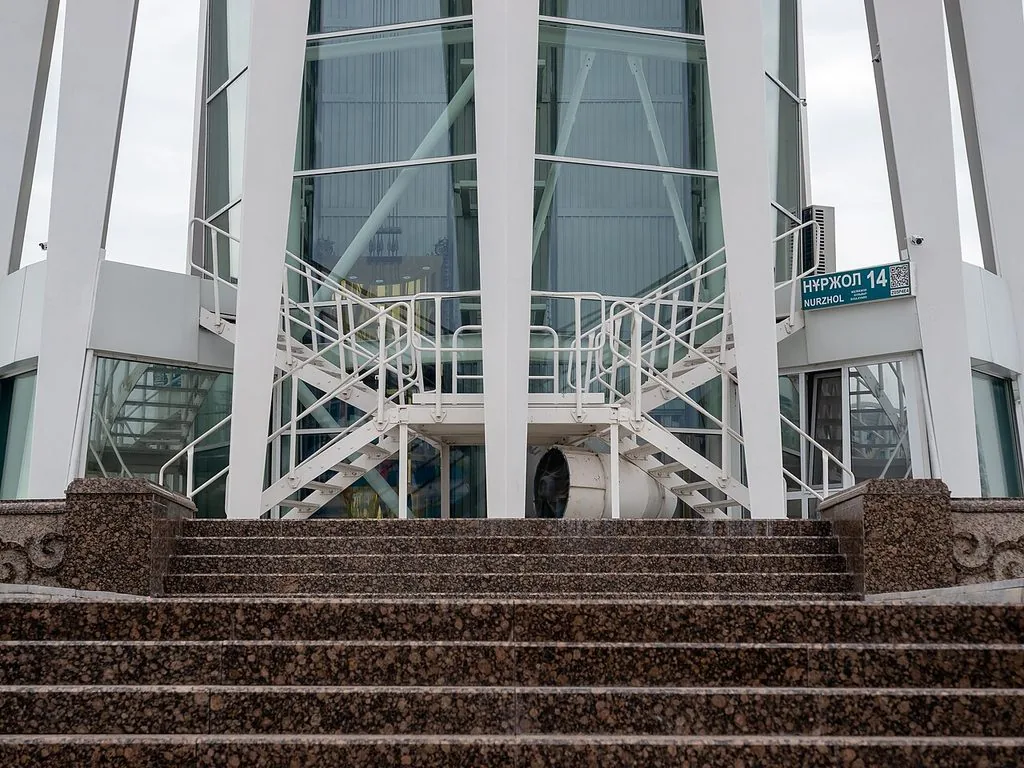
Kazakhstan is famous for the Baikonur Cosmodrome (where Yuri Gagarin launched into space), being the world’s largest landlocked country (2.7 million km²), a nomadic heritage centered on horses and yurts, the Borat movie controversy, Dimash Kudaibergen’s six-octave voice, the birthplace of all apples, massive oil and uranium reserves, eagle hunting, Gennadiy Golovkin (GGG) in boxing, the futuristic capital Astana, and extreme temperatures ranging from -40°C to +45°C. These 15 things define what makes Kazakhstan one of the most surprising countries in the world.
1. Borat: The Movie Kazakhstan Cannot Escape
The first association most foreigners have with Kazakhstan is Sacha Baron Cohen’s 2006 film Borat: Cultural Learnings of America for Make Benefit Glorious Nation of Kazakhstan. The film portrayed a fictional, backward version of the country that bore no resemblance to reality.
How Kazakhs actually feel about Borat:
- Initial reaction (2006) was widespread anger; the government initially considered suing
- By 2012, Kazakhstan’s tourism board embraced it, noting increased international awareness
- The 2020 sequel (Borat Subsequent Moviefilm) received a more relaxed response
- In 2022, Kazakhstan’s tourism board officially adopted Borat’s catchphrase “Very nice!” in an advertising campaign
- Many Kazakhs find the character offensive but acknowledge the unintended tourism boost
- Younger, urban Kazakhs tend to be more humorous about it; older generations less so
The irony is that Kazakhstan is one of the most modern, safe, and prosperous countries in Central Asia, the exact opposite of Borat’s fictional portrayal. If the movie brought you here, you will find a country that is genuinely nothing like the film.
2. Baikonur Cosmodrome: The World’s First Spaceport
The Baikonur Cosmodrome in southern Kazakhstan is humanity’s gateway to space. Built in 1955, it is the world’s first and largest operational spaceport. According to Britannica’s entry on Baikonur, no facility in history has launched more humans into orbit.
Key milestones launched from Baikonur:
- 1957, Sputnik 1, the first artificial satellite
- 1957, Laika, the first animal in orbit
- 1961, Yuri Gagarin, the first human in space
- 1963, Valentina Tereshkova, the first woman in space
- 1971-present, All Soyuz crewed missions to space stations
- 2000-present, Regular crew rotations to the International Space Station
Baikonur is leased to Russia until 2050 at $115 million per year. It remains active for crewed missions and satellite launches. Organized tours allow visitors to watch rocket launches, visit the Gagarin launch pad, and explore the space museum.
Visiting Baikonur: Tours must be booked through authorized agencies (government approval required). Launches are the main draw. Witnessing a Soyuz rocket lift off from the same pad as Gagarin is a once-in-a-lifetime experience.
3. The World’s Largest Landlocked Country
Kazakhstan covers 2,724,900 km², making it the 9th largest country on Earth and the biggest with no ocean coastline, as documented by Wikipedia’s list of countries by area. To put that in perspective:
| Comparison | Size |
|---|---|
| Kazakhstan | 2.7 million km² |
| All of Western Europe | ~2.4 million km² |
| Texas + Alaska combined | ~2.4 million km² |
| France × 4 | ~2.7 million km² |
The country stretches 3,000 km from east to west and shares borders with Russia (north), China (east), Kyrgyzstan, Uzbekistan, and Turkmenistan (south). The Caspian Sea touches the western coast, but since the Caspian is technically an enclosed body of water, Kazakhstan remains landlocked.
This vast size means extraordinary geographic diversity, from the snow-capped Tian Shan mountains to the Kazakh Steppe, from the Caspian coast to the Altai highlands.
For more geographic facts, see where is Kazakhstan and interesting facts about Kazakhstan.
4. Nomadic Culture: Horses, Yurts, and Hospitality
For centuries, Kazakhs were pastoral nomads, moving across the steppe with their herds of horses, sheep, and camels, living in yurts (collapsible felt-covered dwellings called “kiiz ui” in Kazakh). This nomadic heritage is not just history. It actively shapes modern Kazakh identity.
How nomadic culture shows up in modern Kazakhstan:
- Yurts are erected at every national holiday and celebration (especially Nauryz in March)
- Horse culture remains central; horse meat, horse milk, and horse racing are integral to Kazakh life
- Hospitality is a deep cultural value; refusing tea or food when offered is considered rude
- “Konakasy” (guest right): the tradition that a traveler must always be fed and sheltered
- Dastarkhan: the communal table spread, always laden with food for guests
- Zhuz (horde) and clan identity: Kazakhs still identify with their tribal lineage
The nomadic worldview (open spaces, freedom of movement, communal values, and horsemanship) is woven into Kazakhstan’s national mythology, anthem, and everyday social customs.
For deeper exploration, see our culture of Kazakhstan guide.
5. Horse Meat Cuisine and Fermented Mare’s Milk
Kazakhstan is one of the few countries where horse meat is a mainstream dietary staple, not a curiosity. This reflects the nomadic past where horses were central to every aspect of life, including food.
Famous Kazakh horse dishes:
- Kazy: smoked horse meat sausage, considered a delicacy. Served at weddings, holidays, and special occasions
- Beshbarmak: Kazakhstan’s national dish, boiled horse (or lamb) meat served on large flat noodles with onion broth. The name means “five fingers” because it was traditionally eaten by hand
- Zhaya: salted and smoked horse hip meat
- Karta: horse intestine, cleaned and cooked
Fermented drinks:
- Kumys (kumiss): fermented mare’s milk with a slightly alcoholic tang (~2% ABV). Available fresh in spring and summer. An acquired taste that most visitors either love or hate
- Shubat: fermented camel milk, tangier than kumys, popular in western Kazakhstan
Horse meat is expensive (more costly than beef or lamb) and is reserved for celebrations and honored guests. Being served beshbarmak made with horse meat shows respect.
6. Dimash Kudaibergen: The World’s Most Versatile Voice
Dimash Kudaibergen is Kazakhstan’s most internationally famous musician and probably the country’s biggest cultural export after Borat (though Kazakhs would strongly prefer Dimash as the association).
What makes Dimash famous:
- Vocal range spanning six octaves (from D2 to D8), one of the widest documented ranges of any singer
- Rose to global fame on China’s Singer competition in 2017, where he won multiple episodes
- Has performed in 40+ countries to sold-out arenas
- Sings in 12 languages including Kazakh, Russian, Chinese, English, Italian, and French
- Massive fanbase in China (tens of millions of followers on Weibo)
Dimash is a source of enormous national pride. His success has drawn international attention to Kazakhstan’s music scene and culture. For more, see famous people from Kazakhstan.
7. The Birthplace of Apples
One of Kazakhstan’s most surprising claims to fame is that all cultivated apples on Earth trace their genetic origin to the wild apple forests of the Tian Shan mountains in southeastern Kazakhstan.
The wild ancestor species, Malus sieversii, still grows in the mountains near Almaty. DNA research published in Nature Genetics confirmed that these wild apples are the primary ancestor of all 7,500+ cultivated apple varieties worldwide.
Almaty’s very name reflects this heritage. It derives from “alma” (apple), with the city’s old name “Alma-Ata” meaning “Father of Apples.” The wild apple forests in the mountains above the city contain trees producing fruit in red, green, yellow, and purple.
Despite this heritage, Soviet-era urban expansion destroyed many of Almaty’s original apple orchards. Conservation efforts are now underway to preserve the remaining wild apple forests, which are considered globally significant genetic resources.
8. Oil, Uranium, and Natural Resources
Kazakhstan is a natural resource powerhouse, one of the world’s most resource-rich countries per capita.
| Resource | Global Ranking | Key Details |
|---|---|---|
| Uranium | #1 producer (43% of world supply) | Mined primarily by Kazatomprom |
| Oil reserves | Top 12 globally | Tengiz, Kashagan, Karachaganak mega-fields |
| Chromium | Top 3 producer | Essential for stainless steel production |
| Zinc | Top 10 producer | |
| Coal | Major reserves | Powers domestic energy |
| Rare earth elements | Significant deposits | Emerging strategic importance |
Oil revenues have driven Kazakhstan’s post-independence economic transformation. The Kashagan oil field in the Caspian Sea is one of the largest discoveries in the last 40 years, with estimated reserves of 9-13 billion barrels.
The National Fund of the Republic of Kazakhstan (sovereign wealth fund) holds over $55 billion, built from oil revenues as a buffer against commodity price swings.
9. Eagle Hunting: Ancient Tradition Still Alive
Eagle hunting (berkutchi) is one of Kazakhstan’s most visually spectacular traditions. Kazakh hunters train golden eagles, birds with 2-meter wingspans, to hunt foxes, hares, and wolves on the steppe.
Key facts about Kazakh eagle hunting:
- Practiced for over 4,000 years
- Recognized by UNESCO as Intangible Cultural Heritage
- Most active in the Altai Mountains of eastern Kazakhstan
- Eagles are captured young, trained for 5-10 years, then released back into the wild
- The bond between hunter and eagle is deeply personal; hunters name their birds and consider them family members
- Annual eagle hunting festivals draw both domestic and international visitors
The practice gained global attention through the 2016 documentary The Eagle Huntress, about a Kazakh girl in Mongolia’s Altai region. In Kazakhstan, eagle hunting remains a living tradition rather than a tourist performance, though tourism experiences are available near Almaty.
10. Gennadiy “GGG” Golovkin: Boxing Legend
Gennadiy Golovkin, known globally as “GGG” (Triple G), is Kazakhstan’s most famous athlete and one of boxing’s greatest middleweights.
GGG’s achievements:
- WBA, WBC, IBF, and IBO middleweight champion
- 20 consecutive middleweight title defenses (one behind the all-time record)
- Record: 42-2-1 (37 KOs), 88% knockout rate
- Olympic silver medalist (2004 Athens)
- Born in Karaganda, Kazakhstan
- Trained in both Kazakhstan and the United States
GGG put Kazakhstan on the global sports map and is a national hero. His fighting style (relentless pressure, iron chin, devastating power) earned him one of boxing’s most feared reputations.
11. The Futuristic Capital: Astana
In 1997, President Nazarbayev moved Kazakhstan’s capital from Almaty to Akmola (later renamed Astana, then briefly Nur-Sultan, then back to Astana). A modest Soviet-era city on the northern steppe was transformed into a showcase of ambitious modern architecture.
Astana’s most famous buildings:
- Bayterek Tower: 97-meter monument symbolizing a tree of life (97 = 1997, the year of the capital move)
- Khan Shatyr: the world’s largest tent structure, containing a shopping center and indoor beach
- Palace of Peace and Reconciliation: a 77-meter glass pyramid designed by Norman Foster
- EXPO 2017 complex: “Future Energy” themed pavilion, now a cultural and exhibition center
- Hazret Sultan Mosque: Central Asia’s second-largest mosque
The city’s transformation from provincial town to architectural showcase in just 25 years is itself one of the things Kazakhstan is famous for, a statement of national ambition and modernization.
12. Nuclear Testing Legacy: Semipalatinsk
Kazakhstan has a unique and painful relationship with nuclear weapons. The Soviet Union conducted 456 nuclear tests at the Semipalatinsk Test Site (known as “The Polygon”) in eastern Kazakhstan between 1949 and 1989, including above-ground atmospheric tests that spread radioactive fallout over populated areas.
The nuclear legacy in numbers:
- 456 tests over 40 years
- 116 atmospheric tests (the most harmful)
- 1.5 million people exposed to radiation
- Elevated cancer, birth defect, and genetic damage rates that persist today
- Test site area: 18,500 km² (larger than some countries)
After independence, Kazakhstan made the historic decision to give up the world’s fourth-largest nuclear arsenal (inherited from the Soviet Union), approximately 1,400 warheads. This voluntary denuclearization, formalized in the 1994 Budapest Memorandum, remains a source of national pride and established Kazakhstan as a leader in nuclear nonproliferation.
13. Snow Leopards: Ghost of the Mountains
Kazakhstan is home to an estimated 100–130 snow leopards (Panthera uncia), the elusive “ghost of the mountains.” These big cats inhabit the Tian Shan and Altai mountain ranges in the country’s east and southeast. According to the IUCN Red List, the global snow leopard population numbers only 4,000–6,500 individuals across 12 range countries.
Snow leopard facts:
- One of the rarest big cats; estimated 4,000–6,500 remain worldwide
- Kazakhstan is one of 12 range countries
- The snow leopard appears on Kazakhstan’s currency (200 tenge note) and is a national symbol
- Conservation programs in the Ile-Alatau and Aksu-Zhabagly reserves protect habitat
- Sighting one in the wild is extremely rare because they are supremely camouflaged
Kazakhstan has increased conservation efforts in recent years, working with the Snow Leopard Trust and UNDP to protect critical habitat corridors.
14. Silk Road History: Crossroads of Civilizations
Multiple branches of the ancient Silk Road crossed Kazakhstan, making it a key corridor connecting China to Europe for over 2,000 years.
Key Silk Road sites in Kazakhstan:
- Turkestan: spiritual capital, home to the UNESCO-listed Mausoleum of Khoja Ahmed Yasawi (built by Timur in the 14th century)
- Otrar: once a major trading hub with a legendary library, destroyed by Genghis Khan in 1219
- Taraz: ancient crossroads city, one of the oldest in Central Asia (2,000+ years)
- Tamgaly: UNESCO World Heritage petroglyphs (Bronze Age, pre-Silk Road)
The Silk Road brought not just trade goods (silk, spices, glass, precious metals) but also religions (Islam, Buddhism, Christianity), technologies, languages, and genetic diversity. Kazakhstan’s position as a civilizational crossroads explains much of its cultural richness.
15. Extreme Hospitality Culture
Kazakh hospitality is not a marketing slogan. It is a deeply embedded social value rooted in nomadic survival on the steppe, where refusing shelter to a traveler could mean their death.
What Kazakh hospitality looks like in practice:
- You will be offered tea immediately upon entering any Kazakh home, refusing is considered rude
- The dastarkhan (table spread) will be loaded with food, even for unexpected guests
- An honored guest receives the best cuts of meat; the sheep’s head is the highest honor
- Konakasy: the tradition that a guest has the right to food, shelter, and a fresh horse (historically)
- Strangers may invite you to their home for a meal; this is genuine, not a scam
- At celebrations, guests are always fed before the host family
This hospitality consistently ranks as the most memorable aspect of visiting Kazakhstan, especially for solo travellers and those visiting rural areas.
For more on experiencing this culture, see our things to do in Kazakhstan guide.
Kazakhstan at a Glance
| Fact | Detail |
|---|---|
| Area | 2,724,900 km² (9th largest in the world) |
| Population | ~20 million (2026) |
| Capital | Astana |
| Largest city | Almaty (~2 million) |
| Languages | Kazakh (state), Russian (official) |
| Currency | Tenge (KZT) |
| Religion | ~70% Islam (moderate), secular state |
| Independence | December 16, 1991 |
| Key exports | Oil, uranium, grain, metals |
| GDP per capita | ~$12,000 (highest in Central Asia) |
| Climate | -40°C to +45°C (extreme continental) |
| Famous Kazakhs | Dimash, GGG, Al-Farabi, Abai, Nazarbayev |
Frequently Asked Questions
- What is Kazakhstan most famous for?
- Kazakhstan is most famous for the Baikonur Cosmodrome (world's first spaceport, where Gagarin launched into space), being the world's largest landlocked country, the Borat movie, nomadic yurt culture, horse meat cuisine, the futuristic capital Astana, and being the world's largest uranium producer.
- Is Kazakhstan the country from Borat?
- Sacha Baron Cohen's 2006 film Borat used Kazakhstan's name, but the fictional portrayal bears no resemblance to the real country. Kazakhstan is a modern, prosperous, and safe nation. Initially offended, Kazakhstan later embraced the accidental tourism boost and adopted Borat's "Very nice!" as an official tourism slogan in 2022.
- What food is Kazakhstan famous for?
- Kazakhstan is famous for beshbarmak (boiled meat with flat noodles, the national dish), kazy (horse meat sausage), kumys (fermented mare's milk), baursak (fried dough), and manty (large steamed dumplings). Horse meat is a dietary staple, not a novelty, reflecting the country's nomadic heritage.
- Who is the most famous person from Kazakhstan?
- Dimash Kudaibergen (singer with a six-octave range and massive global following), Gennadiy Golovkin (GGG, boxing champion), and the medieval scholar Al-Farabi are the most internationally recognized Kazakhs. Nursultan Nazarbayev (first president) is the most well-known political figure.
- Is Kazakhstan a rich or poor country?
- Kazakhstan is classified as an upper-middle-income country by the World Bank with the highest GDP per capita in Central Asia (~$12,000). It is the world's largest uranium producer and a top-15 oil exporter. However, wealth distribution is uneven between cities (Almaty, Astana) and rural areas.
- Why is Kazakhstan called the land of apples?
- The wild ancestor of all cultivated apples (Malus sieversii) originates in the Tian Shan mountains of southeastern Kazakhstan. Almaty's old name Alma-Ata means "Father of Apples." DNA research confirmed that the 7,500+ apple varieties worldwide trace their genetics to these wild Kazakh apple forests.
Last verified: March 2026
More Stories
facts
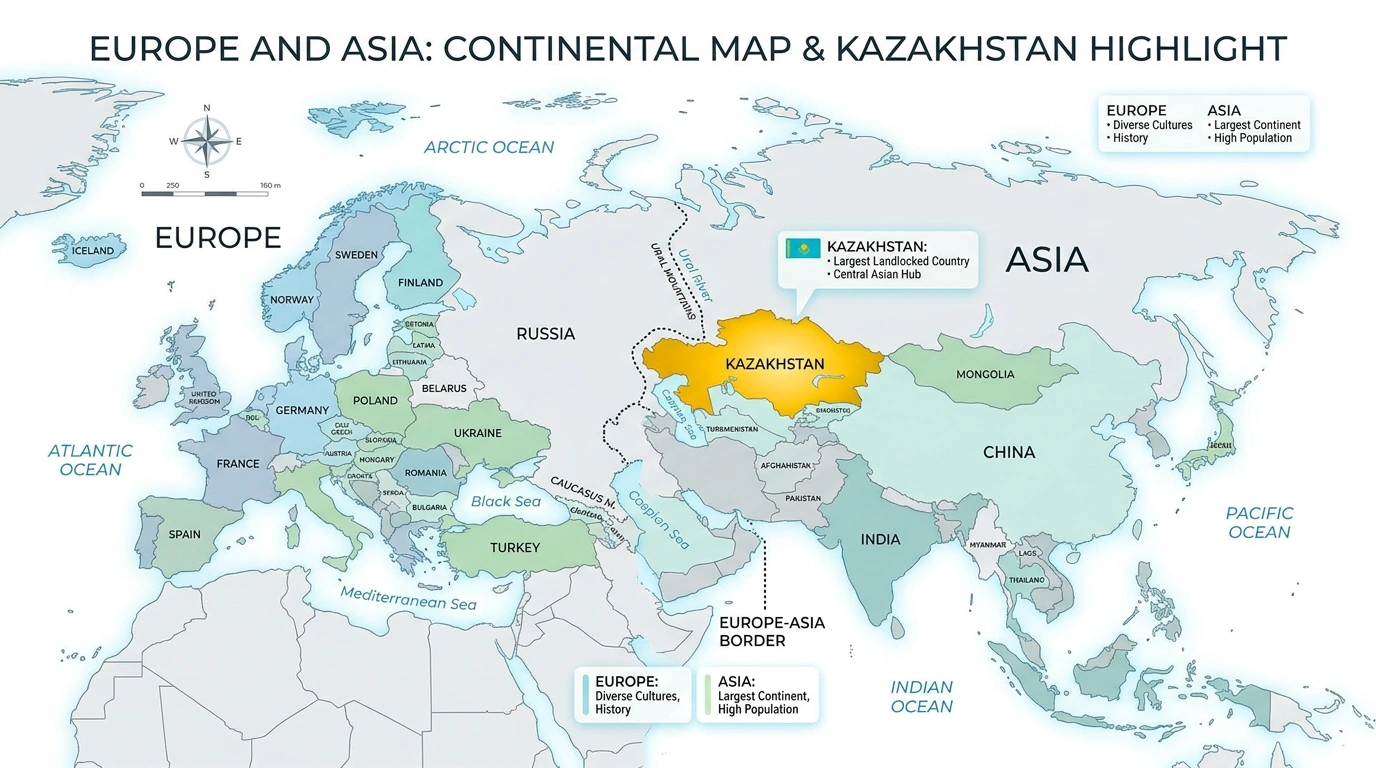
Is Kazakhstan in Europe or Asia? The Definitive Answer
Is Kazakhstan in Europe? No — it's in Central Asia. A tiny western sliver crosses into Europe geographically, but 95%+ of the country is in Asia.
facts
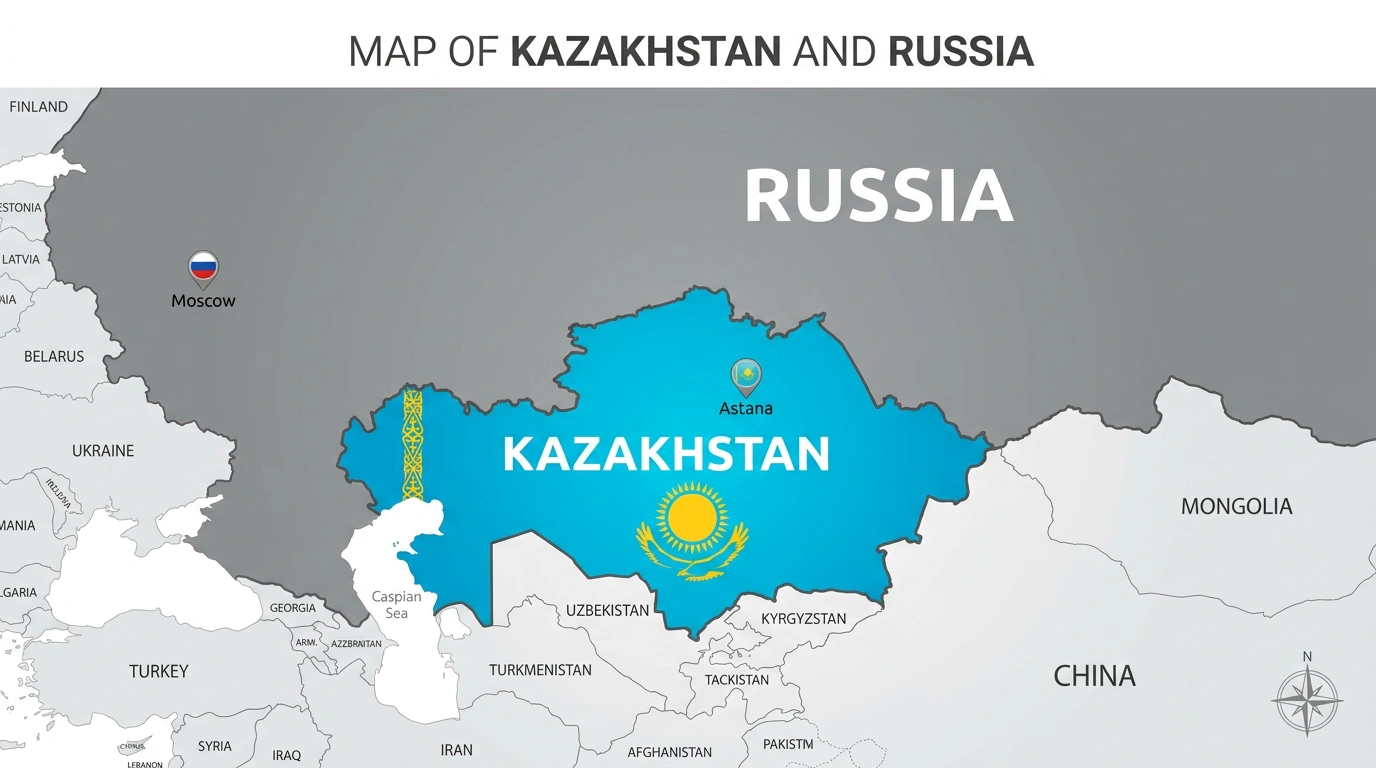
Is Kazakhstan in Russia? No — Here's the Full Explanation
Kazakhstan is not in Russia. It's an independent country since 1991. Learn why people confuse them, key differences, shared history & current relations.
facts
Where Is Central Asia? 5 Countries, Map & Geography Guide
Where is Central Asia? 5 countries between Russia, China, and Iran covering 4 million km². Maps, borders, capitals, and why the region matters today.