Places to Visit in Kazakhstan
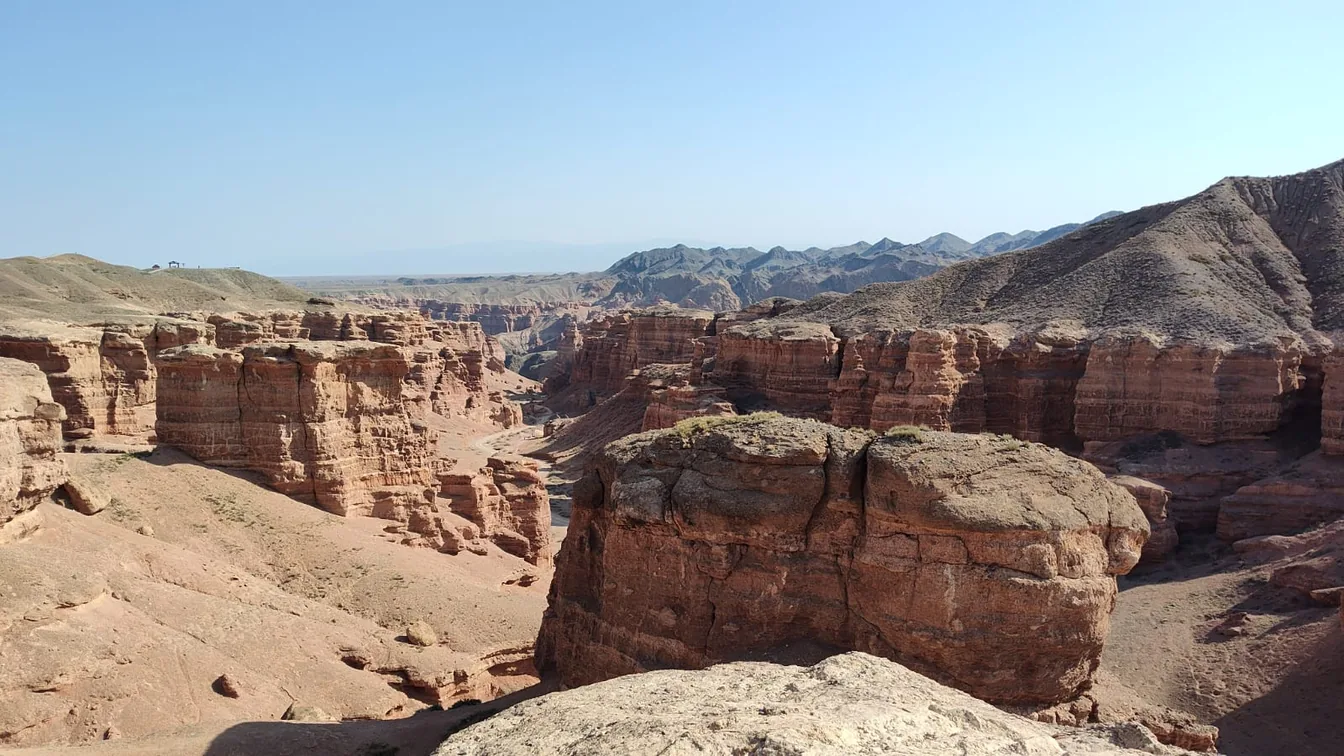
The top 5 places to visit in Kazakhstan: 1) Almaty and Big Almaty Lake, 2) Charyn Canyon, 3) Astana, 4) Mangystau’s underground mosques, 5) Turkestan’s Silk Road heritage. From glacial lakes 30 minutes outside a modern city to underground mosques carved into desert cliffs, Kazakhstan packs more geographic diversity than almost anywhere on Earth.
Kazakhstan is the world’s ninth-largest country, spanning 2.7 million square kilometers across seven regions. Choosing where to go is the hardest part. This guide covers 20 best places organized by region, with season and transport for each.
For broader trip-planning ideas, see our guide to things to do in Kazakhstan. If you are still deciding, read our honest take on whether Kazakhstan is worth visiting.
Almaty Region: Mountains, Lakes, and Canyons
The Almaty region in southeastern Kazakhstan is where most visitors start, and for good reason. The northern Tian Shan mountains rise directly behind Kazakhstan’s largest city, giving you access to alpine lakes, deep canyons, and glacier-fed valleys within an hour or two of downtown. The climate is continental with warm summers and cold, snowy winters that turn the mountains into ski country.
1. Big Almaty Lake
Big Almaty Lake sits at 2,511 meters elevation in a glacial bowl just 28 kilometers south of central Almaty. The turquoise water changes color with the seasons: deep blue in spring, vivid turquoise in summer, grey-green in autumn. Surrounded by snow-dusted peaks reaching 4,000 meters, it is one of the most photographed natural sites in Central Asia. The lake is a reservoir for Almaty’s drinking water, so swimming is prohibited, but the views from the shoreline are world-class.
Best season: June through September, when the road is reliably snow-free. July and August offer the most vivid turquoise color.
How to get there: Taxi or private car from Almaty (45 minutes). No regular public transport. The road is steep and winding, and a high-clearance vehicle is recommended but not strictly necessary in summer.
2. Charyn Canyon
Charyn Canyon stretches 154 kilometers through the steppe east of Almaty, with walls plunging 90 meters deep in the most dramatic sections. The Valley of Castles, the most-visited 2-kilometer stretch, features red and orange sandstone towers and pillars that genuinely rival the American Southwest. A second notable section, the Sogdiana Ash Grove, preserves Ice Age relict trees found in only a handful of locations worldwide.
Best season: April through October. Spring (April–May) and autumn (September–October) offer the best light and comfortable temperatures. Mid-summer can exceed 40 degrees Celsius on the canyon floor.
How to get there: 200 km east of Almaty by car (3 hours). No public transport. Day trips are widely available through tour agencies in Almaty, or you can hire a private driver. Basic yurt camps exist near the canyon entrance for overnight stays.
3. Kolsai Lakes
The Kolsai Lakes are a chain of three alpine lakes stacked at increasing elevations in the northern Tian Shan, near the Kyrgyz border. Kolsai 1 (1,818 m) is surrounded by spruce forest and accessible to all fitness levels. Kolsai 2 (2,252 m) is a 3-hour hike uphill and significantly more dramatic. Kolsai 3 (2,650 m) is serious mountain terrain requiring a guide. The lakes rank among the most scenic natural sites in all of Central Asia.
Best season: June through September. July and August are peak months with the warmest water temperatures, though “warm” is relative at this altitude. Wildflower season peaks in June.
How to get there: 330 km southeast of Almaty (5–6 hours by car). Guesthouses and yurt camps operate near Kolsai 1 village. Most visitors combine Kolsai with Charyn Canyon over a 2–3 day trip. For more lake and mountain options, see our Kazakhstan mountains guide.
4. Turgen Gorge
Turgen Gorge is a lush river valley 90 kilometers east of Almaty in the Ile-Alatau National Park, known for its chain of seven waterfalls, alpine meadows, and hot springs. The most popular waterfall, Bear Waterfall (Medvezhiy), is a 3-kilometer hike from the parking area. The gorge sees fewer visitors than Charyn or Kolsai, giving it a quieter, more intimate feel, and the drive from Almaty is short enough for an easy day trip.
Best season: May through October. The waterfalls are most powerful in May and June from snowmelt. Summer weekends can get busy with Almaty residents.
How to get there: 90 km east of Almaty (1.5 hours by car). A high-clearance vehicle is needed for the upper sections of the gorge road. Tour operators in Almaty offer day trips. National park entrance fee applies. For a full list of protected areas, see our Kazakhstan national parks guide.
Astana: The Futuristic Capital
Astana (briefly renamed Nur-Sultan from 2019 to 2022) is Kazakhstan’s purpose-built capital on the northern steppe, moved from Almaty in 1997. The city is a showcase of the country’s ambitions, with a skyline of bold, sometimes surreal modern architecture rising from flat grassland. According to Wikipedia’s list of capitals by climate, Astana is among the coldest capitals in the world, with winter temperatures regularly dropping below minus 30 degrees Celsius. For a complete city guide, see our Astana guide.
5. Baiterek Tower
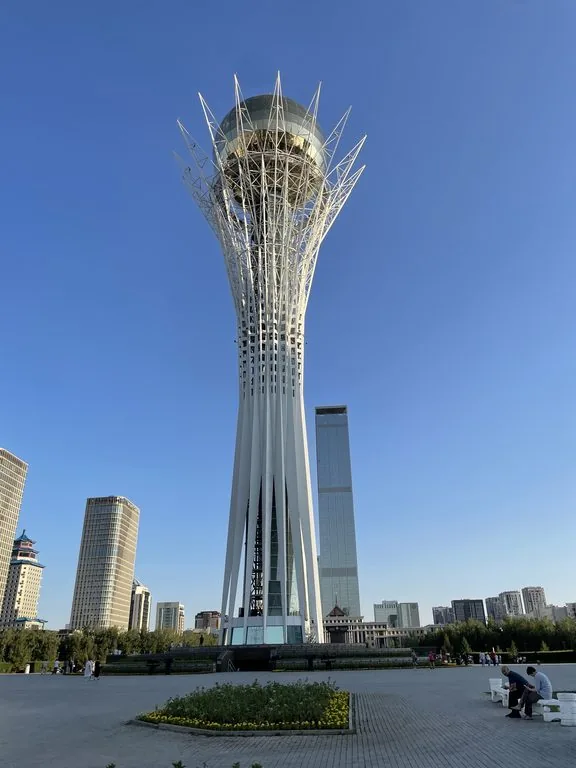
Baiterek is Astana’s most recognizable landmark, a 97-meter observation tower symbolizing a mythical tree of life from Kazakh folklore. The golden orb at the top holds an observation deck with panoramic views of the entire city and the steppe beyond. Inside the orb is a gilded handprint of the first president, Nursultan Nazarbayev. The tower’s height (97 meters) references 1997, the year Astana became the capital.
Best season: Year-round. Summer (June–August) is most pleasant for walking the surrounding boulevard. Winter visits offer dramatic frozen steppe views, but dress for extreme cold.
How to get there: Central Astana, on Nurzhol Boulevard. Walking distance from most city hotels. Air Astana and FlyArystan operate multiple daily flights from Almaty (1.5 hours, from $30 one-way on FlyArystan).
6. Khan Shatyr Entertainment Center
Khan Shatyr is the world’s largest tent-shaped structure, a 150-meter-tall transparent tent designed by Norman Foster that houses a shopping mall, indoor park, and a rooftop beach resort with sand imported from the Maldives. The structure maintains a warm interior climate year-round, making it a social hub during Astana’s brutal winters. Even if shopping malls are not normally your priority, the architectural engineering is genuinely impressive.
Best season: Year-round (it is an indoor attraction). The contrast between minus-30 outside and tropical beach inside is most striking in January or February.
How to get there: Central Astana, a 10-minute walk from Baiterek Tower along Nurzhol Boulevard. Free entry; individual attractions inside are paid.
7. EXPO 2017 Sphere (Museum of Future Energy)
The EXPO 2017 complex was built for the international exposition on “Future Energy.” The centerpiece is the Nur Alem sphere, the world’s largest spherical building (80 meters in diameter), now housing an interactive museum on renewable energy across eight floors. The surrounding pavilions host rotating exhibitions, a congress center, and the IT University. The complex represents one of the largest infrastructure investments in Astana’s modern history.
Best season: Year-round. Allow 2–3 hours for the sphere museum.
How to get there: Southern Astana, accessible by city bus or taxi from the center. Entrance fee for the museum is approximately 2,000 tenge ($4).
South Kazakhstan: Silk Road Heritage
Southern Kazakhstan holds the oldest continuously inhabited cities in the country, Silk Road trade routes that connected China to the Mediterranean, and the spiritual heart of Kazakh culture. Lonely Planet rates southern Kazakhstan as a must-visit for its Timurid architecture and Silk Road heritage. The region is hot and dry in summer, with a distinctly Central Asian character, closer culturally to Uzbekistan than to the steppe cities further north.
8. Turkestan
Turkestan is the spiritual capital of the Kazakh world. The Mausoleum of Khoja Ahmed Yasawi, a 14th-century masterpiece of Timurid architecture, is Kazakhstan’s most important UNESCO World Heritage Site and the country’s most significant pilgrimage destination. The surrounding Silk Road complex has been extensively restored with a new amphitheater, caravanserai, and museum district. Turkestan draws visitors from across Central Asia and is increasingly a major international tourist destination.
Best season: March through May and September through November. Summers are extremely hot (40+ degrees Celsius). The mausoleum is open year-round.
How to get there: Direct train from Shymkent (1.5 hours) or Almaty (overnight). Domestic flights connect via Turkestan Airport (opened 2020). The new high-speed rail link from Shymkent has made day trips practical. Read more about Kazakhstan’s top tourist attractions.
9. Shymkent
According to stat.gov.kz, Kazakhstan’s third-largest city (population 1.2 million) is the cultural heart of the south, with a character that feels distinctly different from Almaty or Astana. The bazaars are louder and more chaotic, the food is heavily influenced by Uzbek cuisine (some of the best plov, samsa, and lagman in the country), and the old city retains a low-rise, tree-lined atmosphere. Shymkent is the gateway to Turkestan and the entire southern region.
Best season: March through May and September through November. Summer is oppressively hot. Winter is milder than Astana or Almaty, rarely dropping below minus 10.
How to get there: Direct flights from Almaty (1.5 hours) and Astana (2 hours). Overnight train from Almaty. Shymkent is a major stop on the north-south rail corridor. For a broader city overview, see our Almaty guide for comparison.
10. Sayram (Sairam)
Sayram is one of the oldest continuously inhabited settlements in Kazakhstan, with a history stretching back over 3,000 years. Located 10 kilometers east of Shymkent, this small town was a major Silk Road trading post and the birthplace of Khoja Ahmed Yasawi himself. Key sites include the Ibrahim Ata Mausoleum, Karashash Ana Mausoleum (Yasawi’s parents), and remnants of the ancient city wall. Sayram offers an authentic window into pre-modern Central Asian urban life that most tourist itineraries overlook.
Best season: March through November. Spring is particularly pleasant, with blooming gardens and mild temperatures.
How to get there: 10 km east of Shymkent by taxi or marshrutka (shared minibus). Easily combined with a Shymkent stay as a half-day trip.
West Kazakhstan: Mangystau and the Caspian Coast
Western Kazakhstan is the country’s most otherworldly region. The Mangystau Peninsula on the Caspian Sea contains underground mosques, dramatic cliff coastlines, chalk canyons, and rock formations that look transplanted from another planet. This is adventure travel territory. Infrastructure is limited, distances are vast, and a 4x4 vehicle is essential outside the city of Aktau. The effort is rewarded with landscapes found nowhere else on Earth.
11. Mangystau Underground Mosques
The Mangystau region contains several underground mosques carved directly into rock by Sufi holy men centuries ago. The most famous are Beket-Ata (a four-chamber mosque carved into a cliff face, now a major pilgrimage site) and Shakpak-Ata (a 10th-century rock-cut mosque with ancient carvings). These are not tourist attractions in the conventional sense; they are active places of worship, deeply significant to Kazakh spiritual identity. Visiting Beket-Ata requires a 4-hour drive across open desert from the nearest town.
Best season: March through May and September through November. Summer is brutally hot (45+ degrees Celsius). Winter is mild but windy.
How to get there: Fly to Aktau (daily flights from Almaty and Astana), then hire a local driver with a 4x4. Beket-Ata is approximately 300 km from Aktau across desert roads. Organized multi-day tours from Aktau are the most practical option for foreign visitors.
12. Bozzhyra Tract and Caspian Cliffs
Bozzhyra is often described as Kazakhstan’s most visually striking landscape: a vast tract of white chalk formations, flat-topped mesas, and deep ravines that resemble a Martian surface. The “Fangs” (two towering chalk pillars) are the signature image. Beyond Bozzhyra, the entire Mangystau coastline features dramatic cliffs dropping directly into the turquoise Caspian Sea, including the Torysh Valley of Stone Balls, a field of perfectly spherical rock concretions scattered across the desert.
Best season: April through May and September through October for the most comfortable temperatures and best photography light.
How to get there: 250–300 km from Aktau by 4x4 across unmarked desert tracks. A local driver who knows the terrain is essential, since GPS alone is not sufficient due to the constantly shifting sand tracks. Multi-day camping tours from Aktau typically combine Bozzhyra, the underground mosques, and the Caspian cliffs into a 3–5 day circuit.
13. Aktau
Aktau is a Soviet-era port city on the Caspian Sea and the gateway to the entire Mangystau region. The city itself is modest (originally built for oil workers, its blocks are numbered rather than named), but the seafront promenade at sunset is genuinely beautiful, the seafood is the best in Kazakhstan, and the city serves as the essential staging point for Mangystau expeditions. Aktau also has a growing reputation for kitesurfing, with consistent Caspian winds from April through October.
Best season: April through October for beach and water sports. March through May and September through November for desert excursions from the city.
How to get there: Direct flights from Almaty (2.5 hours) and Astana (2.5 hours) on Air Astana and FlyArystan. Limited international connections via Istanbul.
Central Kazakhstan: Steppe History
Central Kazakhstan is defined by the vast steppe, the endless grassland that shaped Kazakh nomadic identity for millennia. The region sees fewer foreign tourists, but it holds important historical sites and offers a window into the industrial and Soviet-era history that shaped modern Kazakhstan.
14. Karaganda (Karagandy)
Karaganda is Kazakhstan’s fourth-largest city, built on coal mining and shaped profoundly by the Soviet Gulag system. The city has a distinctly Russian-influenced character, with Soviet-era architecture, wide boulevards, and a large ethnic Russian and German population (descendants of deported peoples). The Karaganda Ecological Museum and the city’s mining heritage offer a different perspective on Kazakhstan than the mountain scenery of the south.
Best season: May through September. Winters are harsh (minus 30 or below). The city is primarily an indoor cultural destination, so season matters less than for nature sites.
How to get there: Direct flights from Almaty (1.5 hours). Overnight train from Almaty or Astana. Karaganda is 200 km south of Astana, easily reachable by bus or shared taxi in 3 hours.
15. ALZHIR Museum (Akmola Camp for Wives of Traitors to the Motherland)
ALZHIR is one of the most powerful museum experiences in Kazakhstan. Located in the village of Akmol (40 km from Astana), this was a Soviet labor camp where wives and children of men accused of political crimes were imprisoned from 1938 to 1953. The museum documents their stories through personal artifacts, letters, and photographs. The memorial complex includes a sculpture garden and archive. It is a sobering but essential stop for understanding the human cost of Soviet collectivization and political repression in Kazakhstan.
Best season: Year-round. The museum is indoors. Allow 2–3 hours for the full exhibition.
How to get there: 40 km southwest of Astana by taxi or organized tour (30 minutes). Often combined with a day trip from Astana. Entry fee is minimal.
East Kazakhstan: Altai Wilderness
Eastern Kazakhstan contains the country’s share of the Altai Mountains, a UNESCO-listed mountain system shared with Russia, China, and Mongolia. This region is the greenest and most forested part of Kazakhstan, with alpine rivers, dense taiga, and biodiversity that includes snow leopards, brown bears, and golden eagles. Infrastructure is limited, making this genuine wilderness travel.
16. Altai Mountains (Kazakh Altai)
The Kazakh section of the Altai Mountains occupies the far northeastern corner of the country, centering on the peaks around Mount Belukha (4,506 m, Kazakhstan’s highest point on the border with Russia). The landscape transitions from open steppe to birch and larch forest to alpine tundra, with rivers running through valleys that have been used by nomadic herders for thousands of years. Multi-day trekking, horseback riding, and river rafting are the primary activities. This is one of the least-visited corners of Kazakhstan, and you will rarely encounter other foreign tourists.
Best season: June through September. July and August are warmest. The region is snowbound from October through May. Mosquitoes and horseflies are intense in June and early July.
How to get there: Fly to Ust-Kamenogorsk (Oskemen), then drive 4–6 hours to trailheads near Katon-Karagai village. Local guides and horse trek operators are based in Katon-Karagai. This is not a destination for spontaneous day trips; advance planning is necessary. For more on Kazakhstan’s mountain regions, see our mountains guide.
17. Lake Markakol
Lake Markakol is a remote alpine lake at 1,449 meters in the southern Altai Mountains, surrounded by virtually untouched wilderness. The lake is 38 km long and 19 km wide, fed by dozens of mountain streams, and home to the endemic Markakol lenok trout found nowhere else on Earth. The Markakol Nature Reserve protects the surrounding forests of Siberian larch, birch, and cedar. This is deep backcountry: the nearest town (Uryl) is small, and tourist infrastructure is minimal. Visitors who make the effort are rewarded with pristine nature on a scale that is increasingly rare anywhere in the world.
Best season: July through August only. The access roads are impassable outside of summer due to snow and mud. Weather can change rapidly even in summer.
How to get there: Fly to Ust-Kamenogorsk, then drive south (6–8 hours on rough roads). A 4x4 vehicle and local driver are essential. Homestays in Uryl village are the only accommodation option. Permits may be required for the nature reserve; check locally.
North Kazakhstan: Forest and Lakes
Northern Kazakhstan is where the steppe meets the forests of Siberia. The landscape softens here, with pine-covered hills, granite outcrops, and clear lakes replacing the flat grassland further south. The region is popular with domestic tourists but sees relatively few international visitors, making it an authentic window into how Kazakhstanis actually vacation.
18. Burabay (Borovoe) National Park
Burabay (known as Borovoe in Russian and often called “the Switzerland of Kazakhstan”) is a resort zone 250 km north of Astana centered on a cluster of granite peaks, pine forests, and clear lakes that look completely unlike the surrounding steppe. The signature landmark is Zhumbaktas (“Sphinx Rock”), a granite formation rising from the lake. Swimming, hiking, paddleboating, horseback riding, and mushroom foraging are the main activities. Sanatoriums from the Soviet era have been modernized into comfortable resort hotels.
Best season: June through August for swimming and outdoor activities. September is beautiful with autumn foliage. Winter offers cross-country skiing and ice fishing.
How to get there: 250 km north of Astana by car (3 hours) or bus. Regular minibuses operate from Astana’s main bus station. Train to Kokshetau (1.5 hours from Astana), then bus or taxi to Burabay (1 hour). This is the easiest nature excursion from the capital.
Lesser-Known Sites Worth the Detour
Beyond the main destinations, Kazakhstan has several sites that reward travelers willing to venture further from the usual routes.
19. Baikonur Cosmodrome
The world’s first and largest operational spaceport is located in the southern steppe and still actively launches crewed missions to the International Space Station. Baikonur is leased by Russia from Kazakhstan through 2050. Organized tours allow visitors to see launch pads, the Gagarin Museum, and (if timing aligns) a live rocket launch. For detailed booking information and costs, see our Baikonur Cosmodrome guide. Access requires advance permits arranged through licensed tour operators; spontaneous visits are not possible.
Best season: Year-round, but tours are organized around the launch schedule. Check Roscosmos or tour operator websites for upcoming launch dates.
How to get there: Fly to Kyzylorda, then overland transfer (3 hours). All visits must be arranged through accredited tour operators who handle the Russian and Kazakh permit process.
20. Altyn-Emel National Park (Singing Dune)
Altyn-Emel is a vast national park east of Almaty, best known for the Singing Dune, a 150-meter-high sand dune that produces a deep, low-frequency humming sound when wind moves across its surface. The park also contains the Aktau Mountains (rainbow-colored sedimentary formations), Scythian burial mounds dating back 2,500 years, and a population of kulan (Asiatic wild ass). The combination of desert, colored mountains, and ancient archaeology in a single park is unique in Kazakhstan.
Best season: April through June and September through October. Mid-summer is extremely hot. The Singing Dune phenomenon is most audible in dry conditions.
How to get there: 250 km east of Almaty (4 hours by car). No public transport. Park headquarters in the village of Basshi handles entry permits. Hire a driver in Almaty or book through a tour agency. Overnight stays are possible in basic guesthouses near the park entrance.
Summary Table: 20 Best Places to Visit in Kazakhstan
| Place | Region | Best Months | Highlights |
|---|---|---|---|
| Big Almaty Lake | Almaty | Jun–Sep | Turquoise glacial lake at 2,511 m |
| Charyn Canyon | Almaty | Apr–Oct | Red sandstone Valley of Castles |
| Kolsai Lakes | Almaty | Jun–Sep | Three alpine lakes, spruce forests |
| Turgen Gorge | Almaty | May–Oct | Seven waterfalls, alpine meadows |
| Baiterek Tower | Astana | Year-round | 97 m observation tower, city views |
| Khan Shatyr | Astana | Year-round | World’s largest tent structure |
| EXPO Sphere | Astana | Year-round | Renewable energy museum |
| Turkestan | South | Mar–May, Sep–Nov | UNESCO mausoleum, Silk Road complex |
| Shymkent | South | Mar–May, Sep–Nov | Bazaars, Uzbek food, southern culture |
| Sayram | South | Mar–Nov | 3,000-year-old Silk Road settlement |
| Underground Mosques | West (Mangystau) | Mar–May, Sep–Nov | Beket-Ata and Shakpak-Ata rock mosques |
| Bozzhyra Tract | West (Mangystau) | Apr–May, Sep–Oct | Chalk formations, Caspian cliffs |
| Aktau | West | Apr–Oct | Caspian port, kitesurfing, seafood |
| Karaganda | Central | May–Sep | Mining heritage, Soviet history |
| ALZHIR Museum | Central (near Astana) | Year-round | Soviet labor camp memorial |
| Altai Mountains | East | Jun–Sep | Trekking, horseback, taiga wilderness |
| Lake Markakol | East | Jul–Aug | Endemic trout, pristine alpine lake |
| Burabay (Borovoe) | North | Jun–Aug | Pine forests, granite peaks, lakes |
| Baikonur Cosmodrome | South (steppe) | Per launch schedule | Live rocket launches, space history |
| Altyn-Emel | Almaty (east) | Apr–Jun, Sep–Oct | Singing Dune, colored mountains |
Best Time to Visit Kazakhstan
Kazakhstan’s continental climate means extreme seasonal variation. The general rule is straightforward: May through June and September through October are the best months for most destinations. July and August work well for mountain and northern destinations but are brutally hot in the south and west. Winter (December through February) is only recommended for skiing near Almaty and for cold-weather city visits to Astana.
Regional timing matters:
- Almaty region (mountains): June through September
- Astana and North: May through September; Burabay peaks in July and August
- South (Turkestan, Shymkent): March through May, September through November (avoid summer heat)
- West (Mangystau): April through May, September through October (avoid summer)
- East (Altai): July through August only due to snow and road access
For a month-by-month breakdown, see our Kazakhstan weather by month guide.
How to Travel Between Destinations
According to National Geographic’s Central Asia coverage, Kazakhstan spans extreme distances (Almaty to Aktau is 3,000 km). Planning transport between regions is essential.
Flights: Air Astana and budget carrier FlyArystan connect all major cities. Almaty to Astana flights take 1.5 hours and start around $30 one-way on FlyArystan. Flights to Aktau, Shymkent, Turkestan, Kyzylorda, and Ust-Kamenogorsk operate daily or several times weekly.
Trains: The rail network covers the Almaty–Astana–Shymkent corridor well, with overnight sleeper trains that are comfortable and affordable ($15–40 depending on class). The new Shymkent–Turkestan fast train has made southern Kazakhstan easier to explore.
Car rental and drivers: For remote nature destinations (Charyn Canyon, Kolsai Lakes, Mangystau, Altai), renting a car or hiring a driver is the most practical option. 4x4 vehicles are essential for Mangystau and the Altai. Major car rental companies operate in Almaty and Astana.
Buses and marshrutkas: Intercity buses connect major cities at low cost. Marshrutkas (shared minibuses) serve shorter routes. Useful for Astana to Burabay, Shymkent to Turkestan, and similar corridor routes.
Budget Tips for Visiting Kazakhstan
Kazakhstan is affordable by European and North American standards but not as cheap as Kyrgyzstan or Uzbekistan. A realistic daily budget is $40–70 for mid-range travel (guesthouses, local restaurants, shared transport) or $100–150 for comfortable travel (3-star hotels, private drivers, flights between cities).
Key cost-saving tips:
- FlyArystan offers domestic flights from $20–40 if booked in advance
- Train travel is roughly 50–70% cheaper than flying on the Almaty–Astana route
- Guesthouses and homestays near nature destinations cost $15–30 per night including meals
- Bazaar food (samsa, plov, lagman) runs $1–3 per meal
- Group tours to Charyn Canyon or Kolsai Lakes from Almaty split costs significantly versus private transport
Is Kazakhstan Safe for Tourists?
Kazakhstan is generally safe for tourists across all major destinations. Violent crime against foreign visitors is extremely rare. The primary risks are related to road conditions (especially on remote routes in Mangystau and the Altai), altitude sickness at high mountain sites, and extreme weather (both summer heat in the south and winter cold in the north). Standard travel precautions apply. For a detailed safety assessment, see our guide on whether Kazakhstan is safe for travel.
Frequently Asked Questions
- What is the number one place to visit in Kazakhstan?
- Almaty and its surrounding mountains, including Big Almaty Lake, Charyn Canyon, and Kolsai Lakes, offer the most rewarding combination of scenery, accessibility, and infrastructure. Most first-time visitors should start here and spend at least 3–4 days.
- What is the most beautiful place in Kazakhstan?
- Bozzhyra in Mangystau (western Kazakhstan) and Kolsai Lakes in the Tian Shan are widely considered the two most visually spectacular sites. Bozzhyra has Mars-like chalk formations; Kolsai has turquoise alpine lakes surrounded by spruce forest. Both require multi-day trips.
- How many days do you need to visit Kazakhstan?
- A minimum of 7 days covers Almaty, mountain day trips, and either Astana or Turkestan. Two weeks allows you to explore multiple regions, for example, Almaty region plus the south or west. Three weeks lets you cover most of the destinations in this guide.
- Is Kazakhstan expensive to visit?
- No. Kazakhstan is affordable by Western standards. Budget travelers can manage on $30–50 per day (hostels, bazaar food, public transport). Mid-range travelers spend $50–80 per day. Domestic flights start at $20–40 on FlyArystan, and a full meal at a local restaurant costs $3–8.
- What is the best month to visit Kazakhstan?
- September is the single best month for an all-around Kazakhstan trip, warm but not extreme, autumn colors in the mountains, comfortable temperatures in the south, and fewer crowds than July and August. May and June are also excellent for most regions.
- Do I need a visa to visit Kazakhstan?
- Citizens of over 60 countries, including the US, UK, EU member states, Canada, Australia, and most Asian nations, can visit Kazakhstan visa-free for up to 30 days. Check the current list at evisa.e.gov.kz before booking.
Last verified: March 2026
More Stories
travel
Kazakhstan Tourist Attractions: 18 Must-See Places
Kazakhstan tourist attractions: 18 must-see places from Charyn Canyon and Kolsai Lakes to Baikonur Cosmodrome. Entry fees, best seasons, and how to go.
travel
Kazakhstan Tourism: What to Know Before You Visit
Plan your Kazakhstan trip with this tourism guide. Visa rules, costs, safety, best cities, transport, when to go, and how to make the most of your visit.
travel
Is Kazakhstan Worth Visiting? 10 Reasons Yes
Is Kazakhstan worth visiting? Honest assessment with 10 reasons, who it suits best, costs, safety, and practical tips. Find out why travelers love it.