Manty: Kazakh Steamed Dumplings Recipe & Guide
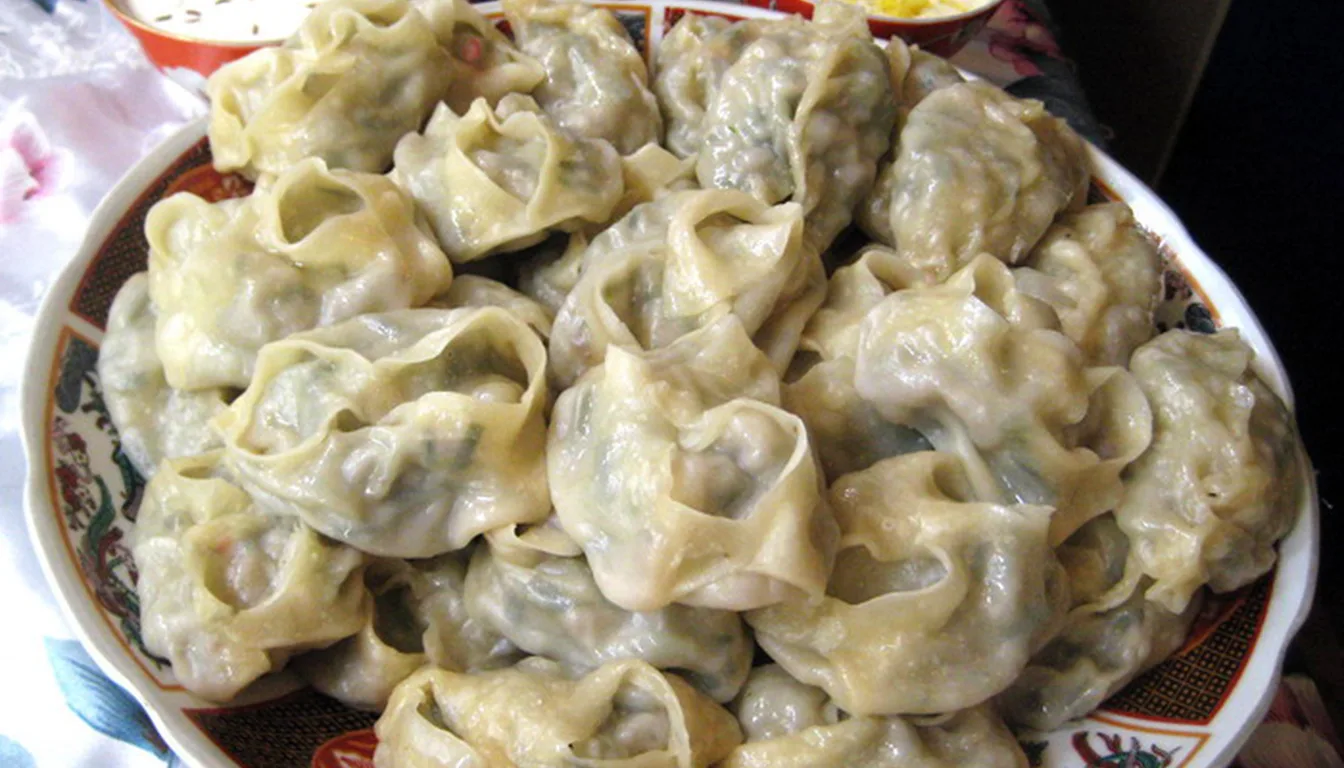
Manty are large steamed dumplings filled with hand-chopped lamb, raw onion, and tail fat, and they are the most beloved comfort food in Kazakhstan and one of the defining dishes of Central Asian cuisine. Each dumpling weighs 60-80 grams (about fist-sized), is cooked exclusively by steaming in a multi-tiered mantovarka for exactly 45 minutes, and releases a burst of hot broth when bitten. Kazakh manty differ from Chinese jiaozi (smaller, boiled, pork-filled), Georgian khinkali (boiled, herb-spiced), and Turkish manti (tiny, yogurt-topped) through their size, steaming method, and the distinctive lamb-onion-fat filling that creates internal juice during cooking.
According to UNESCO’s documentation of Central Asian culinary heritage, manty represent one of the region’s most significant shared food traditions, with each country maintaining distinct preparation methods. Walk into any Kazakh home during a family gathering, and the kitchen will smell of steaming manty. Walk into any bazaar food court, and manty will be stacked on plates behind the counter, glistening with butter. Walk into any traditional restaurant, and manty will be near the top of the menu. This is not just a popular dish. It is a cultural institution. Kazakh grandmothers are judged on their manty. Wedding celebrations feature them. Children learn to fold them before they learn to cook anything else. The dish connects Kazakhstan to a culinary tradition stretching from Turkey to Mongolia, adapted through centuries of Silk Road exchange into something distinctly Central Asian. This guide covers the history, the traditional recipe with step-by-step instructions, the regional variations, where to eat the best ones, and the cultural significance that makes manty more than just dumplings.
What Are Kazakh Manty?
Kazakh manty are large hand-folded dumplings made from thin unleavened wheat dough, filled with a mixture of hand-chopped lamb (or beef), raw onion, and lamb tail fat (kurdyuk). They are cooked exclusively by steaming in a special multi-tiered steamer called a mantovarka (or mantyshnitsa). The steaming method is not negotiable: boiled dumplings are pelmeni, fried dumplings are chebureki, but manty are always steamed.
Key characteristics that define authentic Kazakh manty:
- Size: Large, about the size of a clenched fist. One dumpling weighs 60-80 grams.
- Dough: Thin but sturdy enough to hold juicy filling without tearing during 45 minutes of steaming
- Filling ratio: 70% meat, 30% raw onion and fat. The onion and fat are critical because they melt during steaming and create the juice inside.
- Cooking: Steam only, in a mantovarka, for exactly 45 minutes
- Fold: Pinched at the top into a distinctive “rose” or four-pointed shape, always fully sealed
- Serving: With smetana (sour cream), and sometimes sprinkled with fresh herbs
A single serving of 4-6 manty constitutes a full meal. According to the Kazakh Academy of Nutrition’s dietary studies of traditional Central Asian foods, cited in Wikipedia’s article on manty, the combination of protein from the meat, fat from the kurdyuk, carbohydrates from the dough, and moisture from the onion creates a complete, calorie-dense dish designed for people living active lives in a harsh continental climate.
History and Origins
According to the UNESCO Intangible Cultural Heritage programme, which has recognized flatbread-making and other Central Asian food traditions, the word “manty” traces back through Turkic languages to the Chinese mantou (steamed bun), as documented by Wikipedia’s etymology of manty, reflecting the dish’s journey along the Silk Road. However, the evolution from Chinese steamed bread to Central Asian meat dumplings represents centuries of cultural adaptation rather than simple borrowing.
The most widely accepted theory places the origin of filled steamed dumplings among the Turkic and Mongol peoples of Central Asia sometime between the 8th and 13th centuries. As Turkic peoples migrated westward and interacted with Chinese, Persian, and Mongol culinary traditions, the concept of steaming dough with a filling took on distinctly Central Asian characteristics: lamb replaced pork (reflecting Islamic dietary law), raw onion and fat became essential components, and the dumplings grew larger to serve as a substantial meal for nomadic herders.
By the time of the Kazakh Khanate (15th-18th centuries), manty were firmly established as a festive and everyday food. The dish spread in every direction along trade routes: westward to Turkey (where manti became tiny yogurt-topped parcels), southward to Afghanistan (where mantu became a sauce-topped dish), and northward to Siberia (where the related pelmeni evolved into their own tradition).
According to the Kazakh Academy of Nutrition, manty occupy a specific cultural position in Kazakhstan: more special than everyday food but less formal than beshbarmak (the ceremonial national dish). They are the dish families make together on weekends, the food that marks casual celebrations, and the comfort food that Kazakh students abroad miss most.
Kazakh Manty vs Other Dumplings
The world is full of dumplings, and travelers often confuse them. Here is how Kazakh manty compare to the most commonly referenced dumpling traditions.
| Dumpling | Origin | Size | Cooking | Filling | Sauce |
|---|---|---|---|---|---|
| Manty (Kazakh) | Central Asia | Large (60-80g) | Steam | Lamb + raw onion + tail fat | Sour cream |
| Manti (Turkish) | Turkey | Tiny (5-10g) | Boil | Beef or lamb | Yogurt + paprika butter |
| Mantu (Afghan) | Afghanistan | Medium (30-40g) | Steam | Beef + onion | Yogurt + meat sauce |
| Khinkali (Georgian) | Georgia | Large (40-60g) | Boil | Spiced beef/pork + herbs | None (eat by hand) |
| Jiaozi (Chinese) | China | Small (10-15g) | Boil or pan-fry | Pork + cabbage/chives | Soy-vinegar dip |
| Momo (Tibetan) | Tibet/Nepal | Small (15-20g) | Steam | Yak/chicken/veg | Chili sauce |
| Pelmeni (Russian) | Russia/Siberia | Small (15-20g) | Boil | Pork/beef mix | Sour cream or vinegar |
The critical distinctions for Kazakh manty: always steamed (never boiled), always large, always contain raw onion in the filling (which creates the juice), and always use lamb or beef with animal fat. The raw onion is the secret: it releases moisture during steaming, essentially braising the meat from inside.
Traditional Recipe: Step by Step
This recipe makes approximately 20 manty, serving 4 people as a main course.
The Dough
Ingredients:
- 500g all-purpose flour
- 1 egg
- 200ml warm water
- 1 tsp salt
- 1 tsp vegetable oil
Method:
- Combine flour and salt in a large bowl, make a well in the center
- Add the egg, water, and oil to the well
- Mix from the center outward until a shaggy dough forms
- Turn onto a floured surface and knead for 10 minutes until smooth and elastic (the dough should spring back when pressed)
- Wrap in plastic and rest for 30 minutes at room temperature (this relaxes the gluten and makes rolling easier)
The Filling
Ingredients:
- 500g lamb shoulder (or 400g beef chuck + 100g lamb tail fat)
- 300g white onion (about 2 large onions)
- 100g lamb tail fat (kurdyuk); substitute beef suet if unavailable
- 1 tsp salt
- 1 tsp freshly ground black pepper
- 1/2 tsp cumin seeds, lightly toasted and crushed (optional but traditional in southern Kazakhstan)
Method:
- Hand-chop the meat into 3-5mm pieces using a sharp knife. Do not use a meat grinder. Ground meat produces a dense, dry texture when steamed. Hand-chopping preserves the loose texture that allows juice to form.
- Chop the tail fat into 3-4mm pieces
- Finely chop the onion, aiming for 2-3mm pieces, smaller than the meat
- Combine meat, fat, onion, salt, pepper, and cumin in a bowl
- Mix thoroughly with your hands until the filling is evenly combined
- Let rest for 15-20 minutes so the salt draws out moisture from the onion
The ratio matters: If you reduce the onion below 30%, the manty will be dry. If you skip the fat, you lose the richness that defines the dish. The three components (meat, onion, and fat) work together.
Assembly and Folding
- Divide the rested dough into 20 equal pieces (about 35g each)
- Roll each piece into a thin circle or square, approximately 12-13 cm across and 2-3mm thick. Thin dough is essential because thick dough makes a stodgy, bread-like dumpling
- Place 1.5-2 tablespoons of filling in the center of each piece
- The Kazakh fold:
- Bring two opposite edges together at the top and pinch firmly
- Bring the other two opposite edges up and pinch to the center point
- You now have four “wings” extending from the center seal
- Pinch adjacent wings together to form a fully sealed parcel with a four-pointed top
- The finished manty should be fully sealed with no gaps, since any opening lets juice escape during steaming
Steaming
- Oil each tier of the mantovarka generously with vegetable oil (manty stick badly to ungreased surfaces and will tear when you try to remove them)
- Place manty in the steamer tiers with at least 2 cm space between each, as they expand during cooking and need steam circulation
- Bring water to a vigorous boil in the base pot before adding the tiers
- Stack the tiers, cover, and steam for exactly 45 minutes over high heat
- Under 40 minutes: dough is not fully cooked through
- 45 minutes: perfect (dough is tender, filling is cooked, juice has formed)
- Over 50 minutes: dough becomes gummy and starts to disintegrate
- Remove carefully, as each manty is full of scalding hot juice
Serving
Transfer manty to a warmed serving plate. Serve immediately with:
- Smetana (thick sour cream), the most traditional Kazakh accompaniment
- Fresh dill or parsley sprinkled on top (optional)
- Melted butter drizzled over (optional, rich)
- Sliced fresh tomatoes and cucumbers on the side
How to eat manty properly: Hold the dumpling with both hands, bite a small hole in the side or bottom first, and drink the hot juice before eating the rest. This prevents the broth from running down your chin and, more importantly, means you experience the best part of the dish, the internal juice, at full intensity. Never cut manty with a knife and fork.
Manty Variations Across Kazakhstan
Pumpkin Manty (Asqabaq Manty)
The most popular non-meat variation, especially in southern Kazakhstan and among Uzbek communities. Raw pumpkin is finely chopped and mixed with onion and fat (and sometimes a small amount of meat). The result is sweeter, lighter, and surprisingly delicious because the pumpkin caramelizes slightly during steaming. This is the closest thing to a vegetarian manty in traditional cooking, though the tail fat is usually still included.
Potato Manty
A simpler, more economical version using chopped raw or boiled potato mixed with onion and fat. Common in home cooking when meat is expensive. Less celebrated than lamb manty but genuinely satisfying and widely eaten.
Mixed Meat and Pumpkin
Arguably the most balanced version, with meat and pumpkin combined in the same filling. The pumpkin adds sweetness and moisture while the meat provides savory depth. Many Kazakh cooks consider this the superior filling because the flavors complement each other.
Qazy Manty
A premium celebration version using qazy (horse meat sausage) as the filling component. According to Kazakhstan’s Ministry of Agriculture and Britannica’s overview of Kazakh cuisine, horse meat is the most prized meat in Kazakh cuisine, and qazy manty are typically reserved for special occasions like weddings, holidays, or honoring important guests.
Uzbek-Style Manty
In areas of Kazakhstan with large Uzbek communities (Shymkent, Turkestan), manty are made with more cumin and sometimes dill in the filling, and are served with katyk (strained fermented milk) rather than smetana. The shape may also differ; some Uzbek-style manty leave a small opening at the top.
Cultural Significance
Manty are woven into Kazakh family and social life in ways that go beyond just being food.
Family Cooking Tradition
Making manty is inherently communal. The dough rolling, filling preparation, and folding are typically done by multiple family members together. Grandmothers teach granddaughters, children fold their first (messy) manty at age five or six, and the quality of a family’s manty is a source of genuine pride. A Kazakh woman’s manty-making skill is still mentioned as a virtue, though younger generations are (slowly) pushing back on this expectation.
Festive Food
Manty appear at almost every Kazakh celebration that does not require the full formality of beshbarmak. Birthday dinners, family gatherings, welcoming guests, and weekend meals all feature manty. They occupy a position between everyday food (like lagman or pelmeni) and ceremonial food (beshbarmak with its elaborate serving ritual).
Hospitality Marker
When a Kazakh family invites you to their home and serves manty, they are showing significant respect, because manty take time and effort to prepare. Accepting and eating them enthusiastically (saying “Damdi!”, meaning delicious) is the appropriate response. See our culture of Kazakhstan guide for more on Kazakh hospitality traditions.
Nauryz Connection
During Nauryz (Kazakh New Year, March 22), manty are commonly served alongside nauryz-kozhe, baursak, and other festive foods. Families prepare them in large quantities for the open-house visiting that characterizes the holiday.
Where to Eat the Best Manty
Almaty
- Navat: upscale traditional Kazakh-Uzbek restaurant with consistently excellent manty. The lamb filling is properly hand-chopped and the dough is thin. $6-8 per serving.
- Qazaq Gourmet: modern presentation of traditional manty with premium ingredients. Good for a special meal. $7-10 per serving.
- Green Bazaar food court: cheap, fast, authentic. Manty here cost 600-1,000 KZT ($1.20-2) per piece and are made fresh throughout the day.
- Neighborhood mantishnitsa: small manty-specific restaurants in residential areas (Shanyrak, Alatau districts) where a plate of 5 costs 1,500-2,500 KZT ($3-5). These are where locals eat and the quality is often the best.
Astana
- Tugan Avylym: ethno-village restaurant on the Left Bank with good manty in a traditional setting. Touristy but the food is solid. $5-8 per serving.
- Arnau: upscale Kazakh-Central Asian restaurant with refined manty. $6-9 per serving.
- Stolovaya canteens: office-district canteens near the Left Bank serve honest manty for 800-1,500 KZT ($1.60-3) per serving.
Shymkent
Kazakhstan’s third city has the strongest Uzbek-Kazakh food culture and arguably the best manty in the country. The bazaar area restaurants serve Uzbek-influenced manty with more cumin, served with katyk. A serving of 5 costs 1,000-2,000 KZT ($2-4). If you are serious about manty, Shymkent is worth the trip.
For more about Kazakhstan’s food culture, see our guide to popular food in Kazakhstan and things to do in Almaty for food-focused activities.
Nutrition Information
| Component | Per 100g | Per serving (5 pieces, ~350g) |
|---|---|---|
| Calories | 198 kcal | 693 kcal |
| Protein | 11g | 38.5g |
| Fat | 9g | 31.5g |
| Carbohydrates | 19g | 66.5g |
| Fiber | 1g | 3.5g |
| Sodium | 380mg | 1,330mg |
According to the Kazakh Academy of Nutrition’s analysis of traditional Central Asian diets, manty are calorie-dense by design. They were developed for people doing heavy physical labor in extreme climates: nomadic herders, farmers, and travelers who needed sustained energy from a single meal. The combination of protein, fat, and carbohydrates makes them remarkably filling.
Manty Across Central Asia
Every Central Asian country claims manty as their own, and every version is worth trying.
Uzbekistan: Slightly smaller than Kazakh manty, with more cumin and sometimes dill in the filling. Served with katyk (strained yogurt) and butter. Uzbekistan has dedicated manty restaurants called mantikhonas, an entire restaurant category devoted to one dish.
Kyrgyzstan: Very similar to Kazakh manty in size and preparation. Often includes potato or pumpkin mixed with meat. Round shapes are common alongside the four-pointed fold.
Tajikistan: Similar to Uzbek versions, sometimes with a beef/lamb mix. The dough may be slightly thicker in traditional preparations.
Turkmenistan: Rare variations include camel meat filling in desert regions, a unique variant found nowhere else in the world.
Afghanistan: Mantu (Afghan spelling) diverge significantly from Central Asian manty. They are smaller, steamed, then topped with a split pea or lentil sauce and a garlic yogurt, essentially becoming a sauced dish rather than a standalone dumpling.
Turkey: Turkish manti are tiny, each dumpling barely larger than a fingertip. They are boiled, then served in a pool of garlicky yogurt with paprika-infused melted butter drizzled over. The shared Turkic name is essentially the only connection to their Central Asian cousins.
Tips for Making Manty at Home
From Kazakh home cooks and professional chefs:
- Tail fat is non-negotiable for authentic flavor. Lamb tail fat (kurdyuk) has a unique sweetness and melting quality. If your local butcher does not carry it, try halal butchers or Middle Eastern grocery stores. Beef suet is the best substitute.
- Hand-chop the meat. Using a grinder destroys the texture. The 5-minute investment in hand-chopping pays off dramatically in the final result.
- Do not reduce the onion. The 30% onion ratio creates the internal juice. Without enough onion, manty are dry.
- Roll the dough thin. Thinner than you think. Hold it up to the light; you should almost see through it. Thick dough ruins the meat-to-dough ratio.
- Seal completely. Any gap lets steam escape and dries out the filling.
- Use a proper mantovarka. Available at Central Asian grocery stores or online. A large bamboo steamer works as a substitute.
- Oil generously. Spray or brush oil on every tier surface. Manty stick ferociously to ungreased metal.
- 45 minutes, no peeking. Opening the lid releases steam and disrupts cooking. Set a timer and wait.
- Serve immediately. Manty cool and stiffen quickly. Eat them within 5 minutes of leaving the steamer.
- Freeze raw for later. Assembled but uncooked manty freeze beautifully on a parchment-lined tray. Steam from frozen, adding 10-15 minutes to the cooking time.
Frequently Asked Questions
- What is manty in Kazakh cuisine?
- Manty are large steamed dumplings (60-80g each, about fist-sized) made from thin wheat dough filled with hand-chopped lamb or beef, raw onion, and lamb tail fat. They are cooked exclusively by steaming in a mantovarka for 45 minutes and served with sour cream. Manty are one of the most popular and culturally significant dishes in Kazakhstan, eaten at family gatherings, celebrations, and casual meals.
- How are Kazakh manty different from Chinese dumplings?
- Kazakh manty are much larger (60-80g versus 10-15g for jiaozi), always steamed (never boiled or fried), filled with lamb and raw onion instead of pork and cabbage, and served with sour cream rather than soy-based dips. The raw onion in the filling creates internal juice during steaming, a defining feature absent in Chinese dumplings. The shared Silk Road ancestry is clear, but the dishes have diverged enormously.
- What is the traditional manty filling?
- Classic Kazakh manty filling is hand-chopped lamb shoulder (not ground) mixed with finely chopped raw onion, lamb tail fat (kurdyuk), salt, and black pepper, in a ratio of approximately 70% meat to 30% onion and fat. The hand-chopping keeps the texture loose, and the raw onion and fat create the juice that fills the dumpling during steaming. Some regions add cumin.
- How long does it take to steam manty?
- Manty steam for exactly 45 minutes over high heat in a mantovarka (tiered steamer). Under 40 minutes leaves the dough undercooked. Over 50 minutes makes the dough gummy and causes it to start disintegrating. Do not open the lid during cooking, lost steam disrupts the process. The water should be at a vigorous boil before the steamer tiers are added.
- What sauce is served with manty?
- In Kazakhstan, manty are traditionally served with smetana (thick sour cream), which cuts the richness of the lamb fat. Other accompaniments include katyk (strained fermented milk, popular in southern Kazakhstan), white vinegar sauce with garlic, or simply melted butter. The proper eating technique is to bite a small hole first and drink the hot internal juice before eating the dumpling.
- Are manty and pelmeni the same thing?
- No, they are entirely different dishes despite both being dumplings. Manty are large (60-80g), steamed, filled with lamb and raw onion, and served with sour cream. Pelmeni are small (15-20g), boiled, filled with a pork-beef mix, and served in broth or with sour cream. Manty are Turkic/Central Asian in origin; pelmeni are Russian/Siberian. Both are loved in Kazakhstan but serve different culinary roles.
Last verified: March 2026
More Stories
food
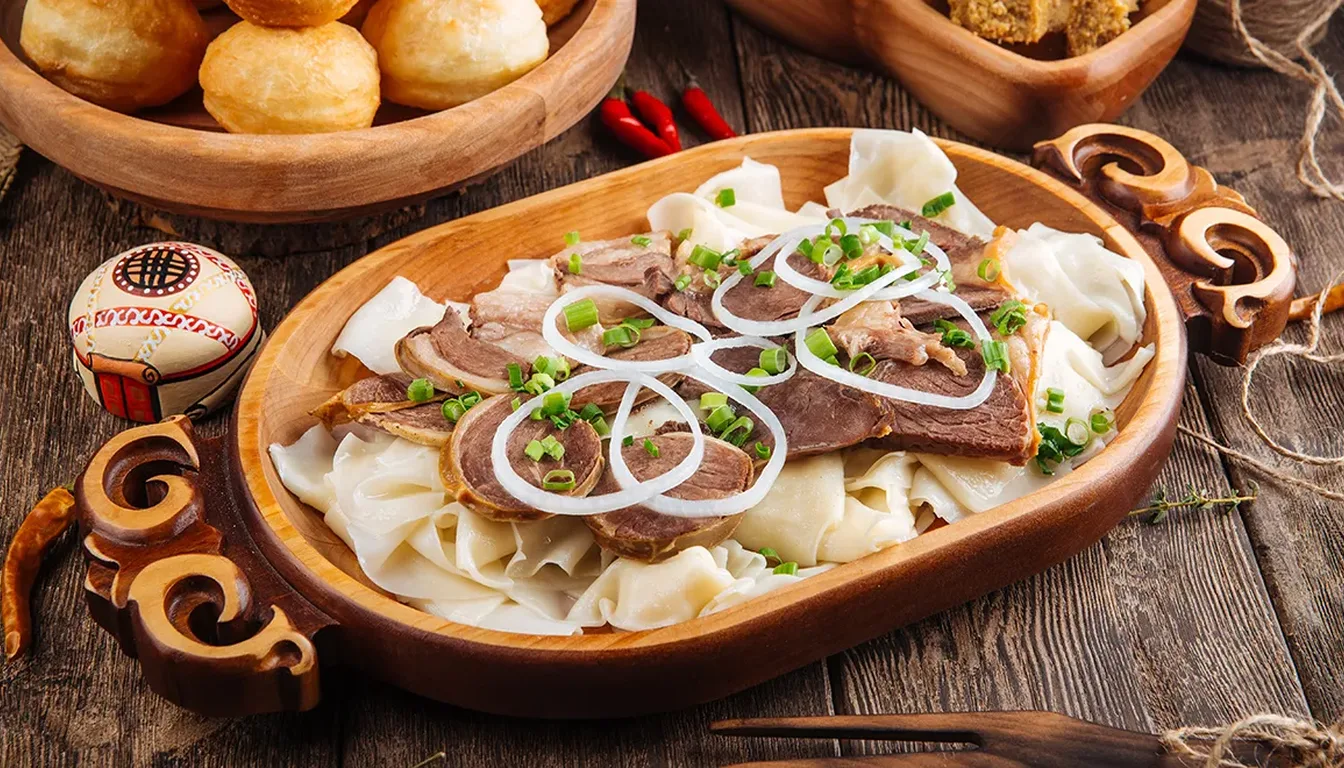
Popular Food in Kazakhstan: Kazakh Cuisine Guide
Popular food in Kazakhstan: 18 must-try dishes from beshbarmak and kazy to kumis and baursaki. Ingredients, cultural meaning, and where to eat each one.
food
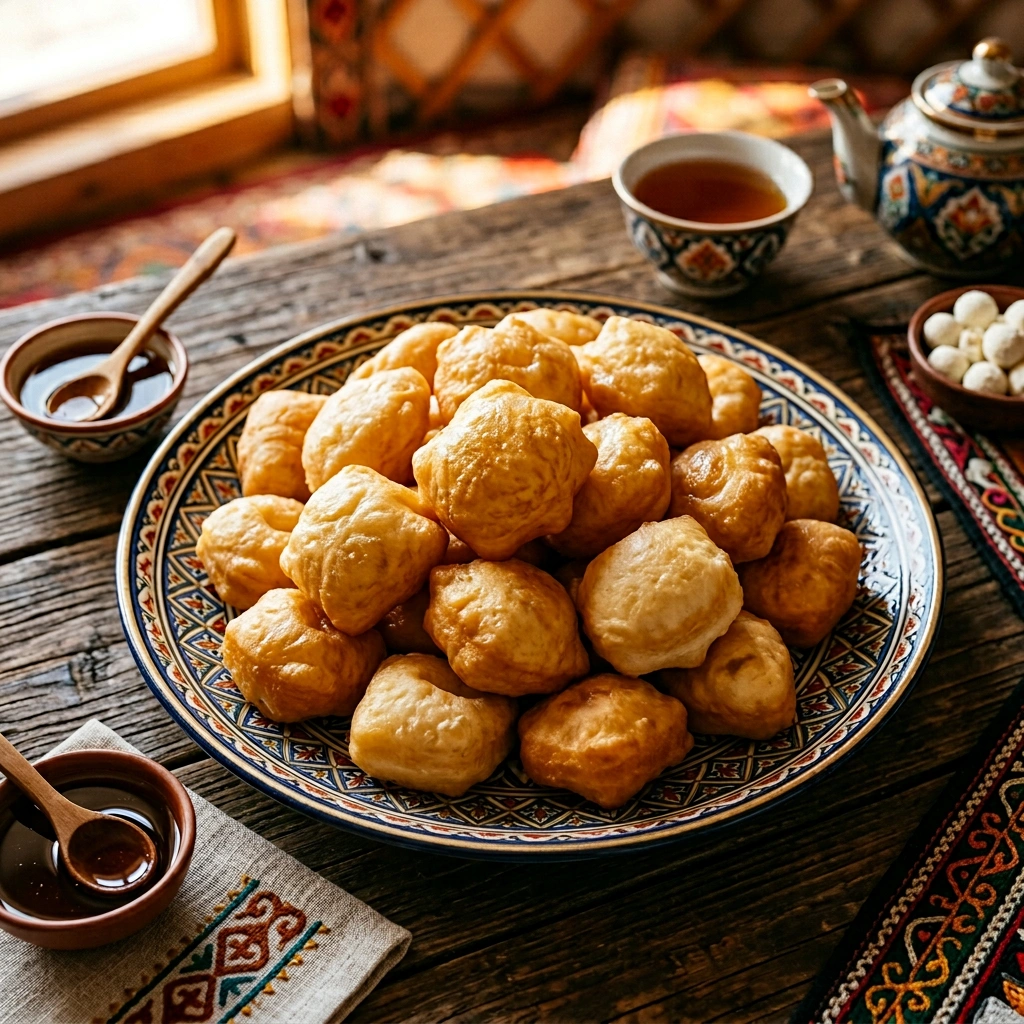
Baursak: Kazakhstan's Golden Fried Bread (History, Recipe, Meaning)
Baursak is Kazakhstan's iconic fried dough served at every celebration. Learn the history, symbolism, classic recipe, regional variations, and cultural role.
food
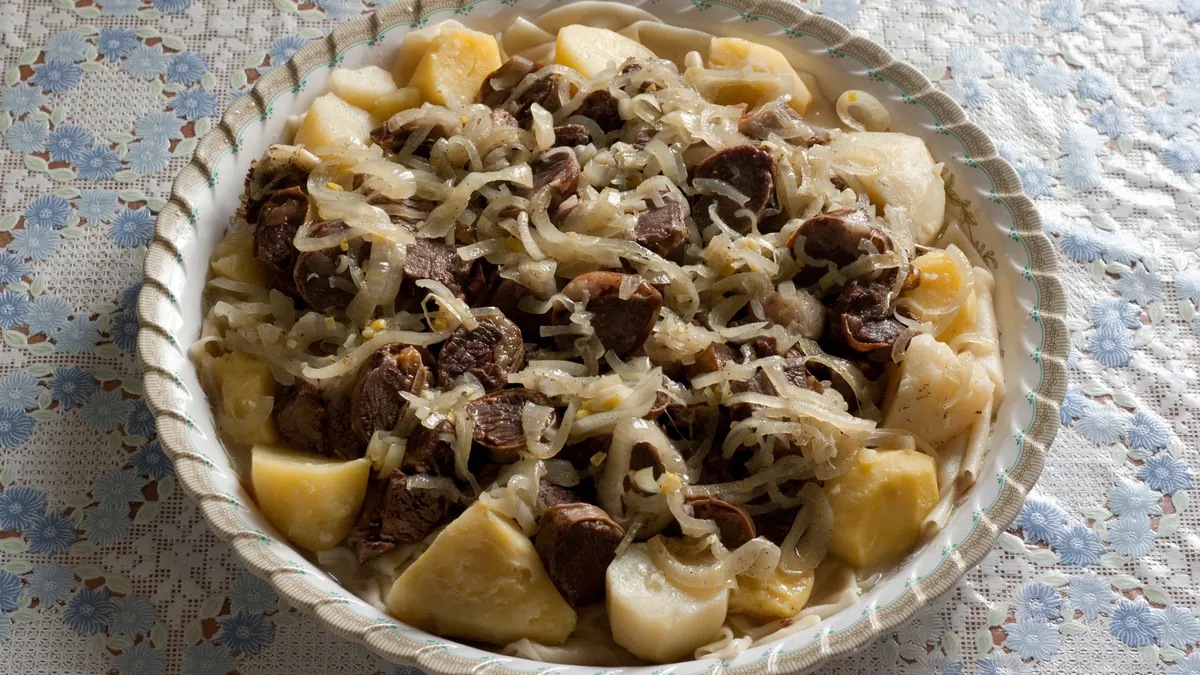
Beshbarmak: How Kazakhstan's National Dish Is Really Made and Eaten
Beshbarmak - Kazakhstan's national dish of boiled meat and noodles. Recipe, history, how to eat it properly, etiquette, and where to try authentic beshbarmak.