Kazakhstan Mountains: Tian Shan, Altai & Hikes
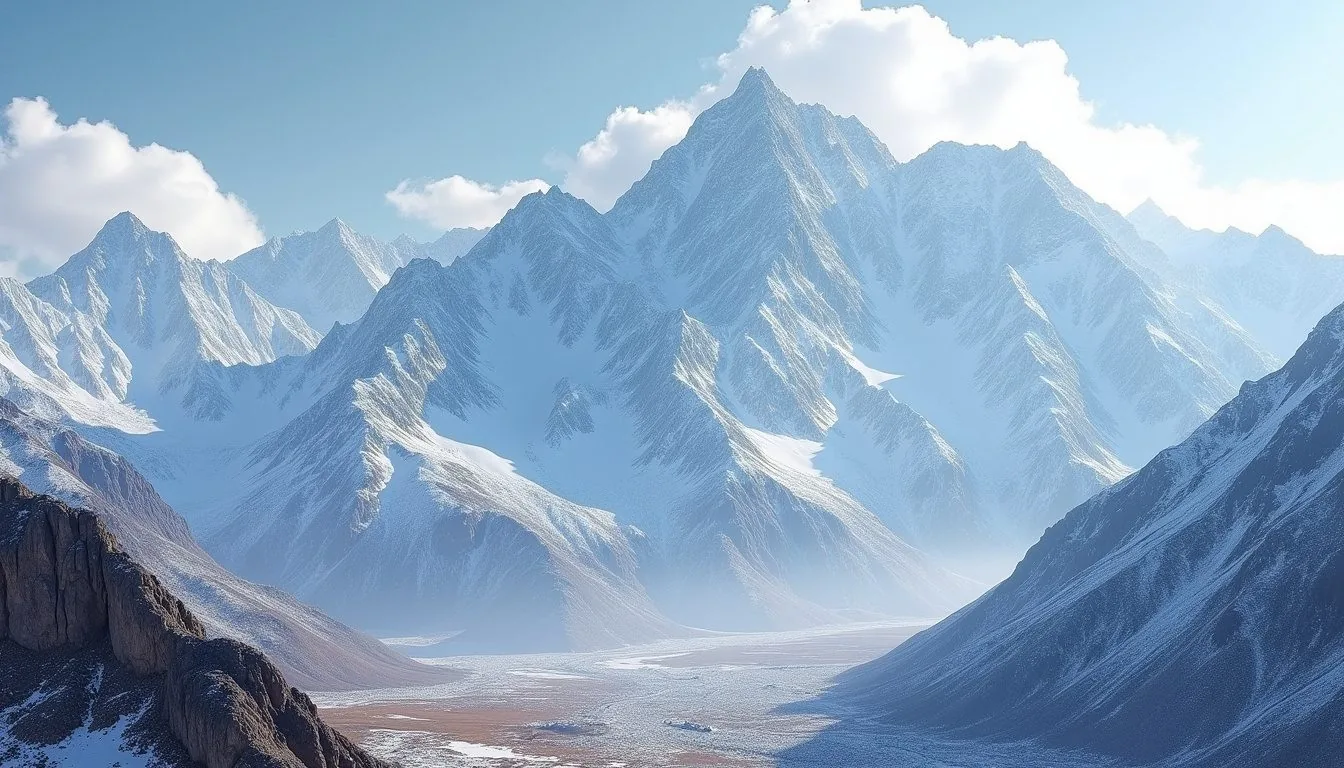
Kazakhstan has some of Central Asia’s most dramatic mountain ranges, including the western Tian Shan, the Altai Mountains, the Zailiyskiy Alatau, the Dzungarian Alatau, and the Karatau Ridge. According to Britannica’s entry on the Tian Shan, this system is the largest mountain range in Central Asia with peaks exceeding 7,000 metres. The country’s highest peak is Khan Tengri at 7,010 meters (6,995m rock summit, 7,010m with the ice cap), standing on the border with Kyrgyzstan in the Central Tian Shan. Despite most of the country being flat steppe and desert, southeastern and eastern Kazakhstan contain world-class alpine terrain with glaciers, turquoise lakes, and trekking routes that rival anything in the Himalayas or Patagonia, but with a fraction of the crowds.
Overview of Kazakhstan’s Mountain Ranges
Kazakhstan’s mountains are concentrated in the southeast and east, forming natural borders with China, Kyrgyzstan, and Russia. Together, they cover roughly 10% of Kazakhstan’s total land area, yet they contain the majority of the country’s biodiversity, freshwater reserves, and outdoor recreation opportunities.
Tian Shan (Celestial Mountains)
According to UNESCO’s World Heritage listing for the Western Tian-Shan, the Tian Shan is the dominant mountain system of Central Asia, stretching over 2,500 km across four countries. In Kazakhstan, the western branch of the Tian Shan occupies the entire southeastern corner, from the outskirts of Almaty all the way to the Chinese border. The Tian Shan translates as “Celestial Mountains” or “Mountains of Heaven” in Chinese, though Kazakhs traditionally call these peaks Alatau (“Colorful Mountains”) or Tengritau.
The highest peaks in the Kazakh Tian Shan exceed 6,000 meters, and the range contains massive glaciers, including the Inylchek Glacier (one of the largest in Central Asia at 60.5 km long). The terrain varies from gentle alpine meadows at 2,000m to extreme high-altitude ice walls above 6,000m.
Altai Mountains
The Altai Mountains occupy the extreme northeast of Kazakhstan, forming the border with Russia, China, and Mongolia in the East Kazakhstan region. These are geologically older and more weathered than the Tian Shan, characterized by dense forests of Siberian spruce and larch, rushing rivers, and a different ecological character entirely.
The highest point in the Kazakh Altai is Mount Belukha at 4,506 meters, shared with Russia. The Altai receives less tourism than the Tian Shan but offers true wilderness experiences: multi-day treks without meeting another soul, whitewater rafting on the Irtysh and Bukhtarma rivers, and access to some of the most pristine ecosystems in northern Central Asia.
Zailiyskiy Alatau
The Zailiyskiy Alatau (Trans-Ili Alatau) is the range directly behind Almaty, rising abruptly from the city at 800m to Talgar Peak at 4,979 meters, a vertical gain of over 4,000m in just 30 km horizontal distance. This is the most accessible mountain area in all of Kazakhstan and arguably the most convenient urban-to-alpine transition anywhere in the world.
The range stretches approximately 280 km east-west and contains dozens of glaciers, alpine lakes, and well-established trail networks. According to WWF Central Asia, the Zailiyskiy Alatau is one of the most ecologically significant mountain areas in the region. Big Almaty Lake, Shymbulak ski resort, and the Kok Zhailau plateau are all in this range.
Dzungarian Alatau
The Dzungarian Alatau (also called Jetisu Alatau) runs along the Chinese border northeast of Almaty. Its highest point reaches 3,637 meters. This range is considered one of the most biodiverse areas in Central Asia. It was a glacial refugium during the ice ages, preserving ancient plant and animal species that disappeared elsewhere.
The famous Dzungarian Gate, a natural wind corridor between the Dzungarian Alatau and the Tarbagatai Mountains, has been an important historical passage for millennia, used by Mongol armies, Silk Road caravans, and migrating wildlife.
Karatau Ridge
The Karatau (“Black Mountains”) is a low, isolated mountain range in southern Kazakhstan, extending about 420 km northwest from the main Tian Shan. Its highest point is only 2,176 meters, but the range has significant geological and paleontological importance. According to Britannica, it contains notable fossil sites and unique endemic flora found nowhere else in Central Asia.
Highest Peaks in Kazakhstan
Kazakhstan has dozens of peaks above 4,000 meters and several above 6,000m. Here are the most significant summits:
| Peak | Elevation | Range | Notes |
|---|---|---|---|
| Khan Tengri | 7,010m (ice), 6,995m (rock) | Central Tian Shan | Highest point in Kazakhstan; marble pyramid summit |
| Marble Wall Peak (Mramornaya Stena) | 6,400m | Central Tian Shan | Massive wall of rock and ice near Khan Tengri |
| Bayankol Peak | 5,791m | Central Tian Shan | Remote peak south of Khan Tengri |
| Talgar Peak | 4,979m | Zailiyskiy Alatau | Highest point visible from Almaty |
| Mount Belukha | 4,506m | Altai | Shared with Russia; sacred mountain |
| Pik Komsomola | 4,376m | Zailiyskiy Alatau | Near Talgar Peak |
| Metallurg Peak | 4,600m | Central Tian Shan | Technical climb |
| Pik Nursultan (formerly Komsomol) | 4,376m | Zailiyskiy Alatau | Renamed; above Shymbulak |
Note: Khan Tengri’s ice cap height of 7,010m was confirmed by Soviet-era surveys. According to the Alpine Club of Kazakhstan, some sources list only the rock summit at 6,995m.
Trekking and Hiking in Kazakhstan’s Mountains
Kazakhstan offers hiking for every level, from easy day walks near Almaty to multi-week expeditions in the remote Central Tian Shan. The trail infrastructure is improving but still basic compared to Western Europe or Nepal. Self-reliance and navigation skills matter outside the most popular routes.
Day Hikes Near Almaty
Big Almaty Lake (2,511m) is the single most popular mountain destination in Kazakhstan. The glacially-fed lake has striking turquoise water and is surrounded by peaks of the Zailiyskiy Alatau. It is a 28 km drive from central Almaty (40-60 minutes). Swimming is prohibited as the lake feeds the city’s water supply, but the viewpoint above offers panoramic views across the entire range. Access requires a small fee at the checkpoint on weekends in summer.
Kok Zhailau Plateau (~2,100m) is a high-altitude meadow above Almaty, reachable on foot in 3-4 hours from the Medeu skating rink or by 4WD. It is beloved by locals for summer picnics and wildflower viewing, and it provides a gentle introduction to the Zailiyskiy Alatau.
Butakovka Waterfall is a shorter hike (2-3 hours round trip) in the gorge system east of Almaty, suitable for families and casual hikers.
Multi-Day Treks
Kolsai Lakes Trek. The three Kolsai Lakes (1,818m, 2,252m, and 2,700m) are stacked in a valley in the Kungey Alatau, about 300 km from Almaty. A 2-3 day trek connects all three lakes through dense spruce forest. The lakes are within Kolsai Lakes National Park, one of Kazakhstan’s most scenic protected areas.
Charyn Canyon to Mountains. While Charyn Canyon itself is a desert formation, the upper Charyn River originates in the Tian Shan, and multi-day routes connect the canyon rim to mountain passes above 3,000m.
Turgen Gorge Circuit. East of Almaty, the Turgen Valley offers a 3-5 day loop through forests, past the 30m Turgen Waterfall, and up to the Turgen Plateau at 2,800m with views of the Zailiyskiy Alatau’s southern glaciers.
Zailiyskiy Traverse. An advanced 5-7 day trek crossing multiple passes between Almaty’s gorges (Big Almaty, Prohodnaya, Kim-Asar, Turgen). Requires camping equipment, navigation experience, and river crossing skills.
Remote Expeditions
Inylchek Valley. The approach to Khan Tengri follows the massive Inylchek Glacier for days. Even non-climbers can trek to base camp (3,900m) for views of the Central Tian Shan’s ice giants. Helicopter access from Almaty or Karakol (Kyrgyzstan) is the standard approach.
Altai Wilderness Treks. Multi-week routes through the Kazakh Altai, particularly in the Katon-Karagay National Park near the Russian border, offer true off-grid wilderness trekking with no trails, no signage, and very few other people.
Skiing in Kazakhstan
Kazakhstan’s premier ski destination is Shymbulak (Chimbulak) Resort, located just 25 km from central Almaty in the Zailiyskiy Alatau.
Shymbulak Resort Details
| Detail | Information |
|---|---|
| Elevation | 2,200m (base) to 3,200m (top station) |
| Vertical drop | 1,000m |
| Runs | 20+ marked runs |
| Lifts | Gondola from Medeu + chairlifts |
| Season | December to March (sometimes April) |
| Day pass cost | ~15,000-20,000 KZT ($30-40 USD) |
| Snowmaking | Limited; natural snow dependent |
| Getting there | Bus or taxi from Almaty center (30-40 min) |
Shymbulak hosted events during the 2011 Asian Winter Games and has been proposed as a venue for future Winter Olympic bids. The resort is modern by Central Asian standards, with rental equipment, ski schools, and restaurants at the base and mid-stations.
Beyond Shymbulak, Kazakhstan has several smaller ski areas:
- Tabagan, a family-oriented resort 17 km from Almaty
- Ak-Bulak, near Almaty, smaller but less crowded
- Nurtau, near Almaty with night skiing options
For experienced backcountry skiers, the Zailiyskiy Alatau above Shymbulak offers extensive off-piste terrain, though avalanche risk is significant and rescue services are limited.
Mountain Climbing and Alpinism
Kazakhstan has a strong mountaineering tradition inherited from the Soviet era, when the Kazakh SSR was a major training ground for Soviet alpinists. Today, the country’s climbing scene is centered in Almaty, with several internationally recognized guide companies operating expeditions to Khan Tengri, Peak Pobeda (on the Kyrgyz border), and other high peaks.
Climbing Khan Tengri
Khan Tengri (7,010m) is the ultimate mountaineering objective in Kazakhstan. The peak’s near-perfect marble pyramid shape makes it one of the most beautiful mountains in the world. At sunset, the marble summit glows red and orange, earning it the nickname “Bloody Mountain.”
Base camp is at 3,900m on the South Inylchek Glacier, reached by helicopter from Almaty (2-3 hours) or from Karakol in Kyrgyzstan. There is no road access.
Standard route: West Ridge, rated 5B (Russian) / TD+ (French). Total ascent from base camp is approximately 3,100 vertical meters.
Expedition duration: 3-4 weeks total, including acclimatization rotations to Camps 1 (4,400m), 2 (5,200m), and 3 (5,900m).
Season: July 1 through August 20. Conditions deteriorate rapidly after mid-August.
Cost: A guided expedition costs $4,000-$7,000 USD, including helicopter transport, permits, food at base camp, and guide services. Companies like Kan Tengri, Central Asia Travel, and Pilgrim Tours run regular expeditions.
Requirements: Khan Tengri has a significant fatality rate due to sudden weather, avalanche risk, and extreme altitude. Climbers should have previous experience above 5,000m and solid technical ice/rock skills.
Other Notable Climbs
- Talgar Peak (4,979m): The highest point of the Zailiyskiy Alatau, visible from Almaty. A 2-3 day climb from Talgar village, rated moderate-difficult.
- Pik Nursultan (4,376m): Above Shymbulak, this is the most accessible technical peak near Almaty. Can be climbed in a long day from the resort.
- Mount Belukha (4,506m): In the Altai, requires a multi-day approach and moderate climbing skills.
Mountain Wildlife and Ecology
The mountains of Kazakhstan are a biodiversity hotspot, sheltering species that have become rare or extinct elsewhere in Central Asia. The Tian Shan and Altai together form one of the most important wildlife corridors on the continent.
Large Mammals
Snow leopard (irbis). According to the IUCN Red List assessment for the snow leopard, Kazakhstan has an estimated 180-200 snow leopards, primarily in the Tian Shan and Dzungarian Alatau. The WWF snow leopard conservation program lists Kazakhstan as one of the 12 range countries with viable wild populations. The snow leopard is Kazakhstan’s most iconic mountain animal and the focus of significant conservation efforts. Sightings are extremely rare, but camera trap studies confirm stable populations in several protected areas.
Marco Polo sheep (argali). The world’s largest wild sheep species, with massive curved horns that can span 1.9 meters. Found in remote high-altitude valleys above 3,500m in the Central Tian Shan and Altai. Listed as Near Threatened according to the IUCN Red List of Threatened Species.
Siberian ibex. The most commonly seen large mammal in Kazakhstan’s mountains. Herds of ibex inhabit rocky terrain above 2,000m throughout the Tian Shan. They are often spotted from hiking trails near Almaty.
Tian Shan brown bear. A subspecies of brown bear found in forested mountain valleys, primarily in the Dzungarian Alatau and Altai. Population estimated at 800-1,000 individuals.
Birds and Flora
The golden eagle is Kazakhstan’s national symbol and is still used for traditional hunting (berkutchi) in the Altai region. Other notable mountain birds include the bearded vulture (lammergeier), Himalayan snowcock, and the endangered saker falcon.
The Tian Shan is also the ancestral home of the wild apple. The species Malus sieversii is the genetic ancestor of all cultivated apples worldwide, as confirmed by research published in Nature Genetics. Wikipedia’s article on Malus sieversii notes that geneticists traced all cultivated apples to this species native to the mountains of Kazakhstan. Wild apple forests still grow in the foothills above Almaty, and the city’s original Kazakh name, Alma-Ata, literally means “Father of Apples.”
Kazakhstan Mountains vs. Other Central Asian Ranges
How do Kazakhstan’s mountains compare to neighboring ranges in the region?
| Feature | Kazakhstan (Tian Shan) | Kyrgyzstan (Central Tian Shan) | Tajikistan (Pamirs) | Pakistan (Karakoram) |
|---|---|---|---|---|
| Highest peak | Khan Tengri 7,010m | Jengish Chokusu 7,439m | Ismoil Somoni 7,495m | K2 8,611m |
| Accessibility | Excellent (Almaty) | Good (Bishkek/Karakol) | Remote | Remote |
| Tourism infrastructure | Moderate | Growing | Basic | Basic |
| Visa requirements | Visa-free for 77 countries | Visa-free for many | eVisa/GBAO permit | Visa required |
| Trekking difficulty | Beginner to expert | Intermediate to expert | Expert mostly | Expert |
| Ski resorts | Shymbulak (modern) | Karakol (basic) | None | None |
| Cost | Moderate | Low | Low | Moderate-high |
Kazakhstan’s key advantage is accessibility: you can fly into Almaty, a modern city with international hotels and restaurants, and be hiking at 3,000m within an hour. No other Central Asian country offers this combination of urban comfort and mountain proximity. For those wanting to explore more of the region, our guide to places to visit in Kazakhstan covers destinations beyond the mountains.
Best Season for Mountain Activities
Timing is critical in Kazakhstan’s mountains. The weather window is shorter than in the Himalayas or Alps, and conditions can change rapidly at altitude.
| Activity | Best Months | Notes |
|---|---|---|
| Day hiking near Almaty | May - October | Snow clears from lower trails by mid-May |
| Multi-day trekking | June - September | Above 3,000m, July-August is most reliable |
| Khan Tengri expedition | July 1 - August 20 | Only viable window; weather deteriorates after mid-August |
| Skiing (Shymbulak) | December - March | Best snow usually January-February |
| Big Almaty Lake visit | June - October | Road may close after heavy rain/snow |
| Kolsai Lakes | June - September | Lower lake accessible May-October |
| Mountain photography | September - October | Clear skies, fall colors, first snow on peaks |
| Wildlife viewing | June - August | Ibex most visible; snow leopard year-round (rare) |
For most visitors, the best time to visit Kazakhstan for mountain activities is late June through mid-September. July and August offer the most stable conditions but also the highest visitor numbers at popular spots like Big Almaty Lake.
Mountain Lakes of Kazakhstan
Kazakhstan’s mountain lakes are among the country’s most spectacular natural attractions. Fed by glaciers and snowmelt, they display vivid colors ranging from deep blue to bright turquoise.
Big Almaty Lake
The most famous mountain lake in Kazakhstan, sitting at 2,511m in the Zailiyskiy Alatau. The lake changes color with the seasons: deep blue in spring, turquoise in summer, greenish in autumn. It is 1.6 km long and up to 40m deep, fed by glacial melt from the surrounding peaks. The drive from Almaty takes 40-60 minutes. A popular day trip from Almaty.
Kolsai Lakes
Three lakes stacked at increasing elevations (1,818m, 2,252m, and 2,700m) in the Kungey Alatau. The first lake is the largest and most accessible, while the third requires a full day’s hike. The Kolsai Lakes are sometimes called the “Pearls of the Northern Tian Shan.” They are located within Kolsai Lakes National Park and require an entrance fee.
Kaindy Lake
One of Kazakhstan’s most unusual natural sites: a submerged forest of spruce trees standing upright in a lake formed by a 1911 earthquake-triggered landslide. The lake sits at 2,000m elevation and has an eerie, otherworldly appearance. It is located near the Kolsai Lakes and is usually visited on the same trip.
Issyk Lake
A smaller alpine lake at 1,756m, about 70 km east of Almaty. The original Lake Issyk was destroyed by a catastrophic mudflow in 1963 that killed over 100 people. The lake has partially reformed and is now a popular local recreation spot with easier access than Big Almaty Lake.
Practical Information: Permits, Guides, and Gear
Permits and Access
Most mountain areas near Almaty are within national parks or nature reserves and require entrance fees (typically 500-1,500 KZT / $1-3 USD per person). Big Almaty Lake and national parks have checkpoints where fees are collected.
For Khan Tengri and other high peaks, a mountaineering permit is required through the Kazakh government. This is typically arranged by your guide company. Border zone permits may be needed for areas near the Chinese and Kyrgyz borders; these take 2-4 weeks to process and should be arranged well in advance.
Hiring Guides
For day hikes near Almaty (Big Almaty Lake, Kok Zhailau, Butakovka), no guide is needed. For multi-day treks and any climbing, a local guide is strongly recommended. Companies based in Almaty include:
- Kan Tengri: Specializes in Khan Tengri and Central Tian Shan expeditions
- Steppe & Sky: Trekking and cultural tours
- Central Asia Travel: Full-service operator for mountains and beyond
- Pilgrim Tours: Budget-friendly climbing expeditions
Expect to pay $50-100 per day for a trekking guide and $150-300 per day for a certified mountain guide on technical terrain.
Gear and Equipment
Almaty has several outdoor gear shops along Dostyk Avenue and in the Mega shopping centers. You can buy or rent:
- Trekking boots, backpacks, sleeping bags
- Crampons, ice axes, and climbing gear (for technical routes)
- Camping stoves and fuel canisters (MSR/Jetboil available)
- GPS devices and paper maps (Zailiyskiy Alatau 1:50,000 topographic maps available at some shops)
For summer day hikes, standard hiking gear is sufficient. For treks above 3,000m, bring warm layers, as temperatures drop below freezing at night even in July. For any climbing above 4,000m, full mountaineering equipment is essential.
Safety Considerations
Mountain rescue in Kazakhstan is improving but still limited compared to European countries. Key safety points:
- Altitude sickness is a real risk above 3,000m. Acclimatize properly.
- Weather changes rapidly in the Tian Shan. Afternoon thunderstorms are common in summer.
- River crossings on multi-day treks can be dangerous, especially in afternoon when glacial melt is highest.
- Bears are present in the Altai and parts of the Dzungarian Alatau. Standard bear safety applies.
- Cell coverage exists near Almaty up to about 2,500m but drops off quickly at higher elevations. Carry a satellite communicator for remote treks.
Frequently Asked Questions
- What are the main mountain ranges in Kazakhstan?
- Kazakhstan has five main mountain ranges: the Tian Shan (including the Zailiyskiy Alatau and Kungey Alatau sub-ranges) in the southeast, the Altai Mountains in the northeast, the Dzungarian Alatau along the Chinese border, and the Karatau Ridge in the south. The Tian Shan is the dominant range, containing the highest peaks including Khan Tengri at 7,010 meters.
- What is the highest mountain in Kazakhstan?
- The highest mountain in Kazakhstan is Khan Tengri at 7,010 meters (including the ice cap) or 6,995 meters (rock summit). It stands on the Kazakhstan-Kyrgyzstan border in the Central Tian Shan range and is one of the most technically challenging and visually striking peaks in Central Asia, with a marble pyramid summit that glows red at sunset.
- Can you go hiking near Almaty?
- Yes, Almaty offers some of the most accessible mountain hiking of any major city in the world. The Zailiyskiy Alatau mountains rise directly behind the city to nearly 5,000 meters. Big Almaty Lake (2,511m), Shymbulak ski resort, Kok Zhailau plateau, and multiple gorges all offer hiking from easy day walks to multi-day treks, all within 30-60 minutes of the city center.
- When is the best time to visit Kazakhstan mountains?
- The best time for mountain activities is late June through mid-September. July and August offer the most stable weather and are the only months for high-altitude climbing (Khan Tengri). Skiing at Shymbulak runs from December to March. Big Almaty Lake is accessible from June to October. September offers excellent photography conditions with clear skies and fall colors.
- Do you need permits to hike in Kazakhstan mountains?
- For day hikes near Almaty, you only need a small national park entrance fee (500-1,500 KZT / $1-3 USD). For climbing Khan Tengri or other high peaks, a mountaineering permit is required through the government. Border zone permits are needed for areas near the Chinese and Kyrgyz borders, these take 2-4 weeks to process and are usually arranged by guide companies.
- Is there skiing in Kazakhstan?
- Yes. Shymbulak (Chimbulak) is Kazakhstan's premier ski resort, located just 25 km from central Almaty at 2,200-3,200m elevation. The season runs from December to March with 20+ runs and a modern gondola. A day pass costs about $30-40 USD. Smaller resorts like Tabagan and Ak-Bulak are also near Almaty. Backcountry skiing is possible but avalanche risk is high.
Last verified: March 2026
More Stories
travel
Medeu Skating Rink & Shymbulak: Prices, Hours & Guide (2026)
Medeu ice rink (1,691m, world's highest) and Shymbulak ski resort: 2026 prices, opening hours, cable car, summer hiking, winter skiing. 20 min from Almaty.
culture
Nauryz in Kazakhstan
Nauryz in Kazakhstan: the 3,000-year-old spring New Year celebrated every March 22. Nauryz kozhe, horse games, yurt festivals, and 2026 event calendar.

travel
Kazakhstan Airports: Guide to All 18 Airports
Full guide to Kazakhstan airports — Almaty (ALA), Astana (NQZ), Shymkent, Aktau, Atyrau. IATA codes, airlines, facilities, transport to city, domestic routes.