The Kazakh Yurt: A 3,000-Year-Old Home You Can Sleep In Tonight
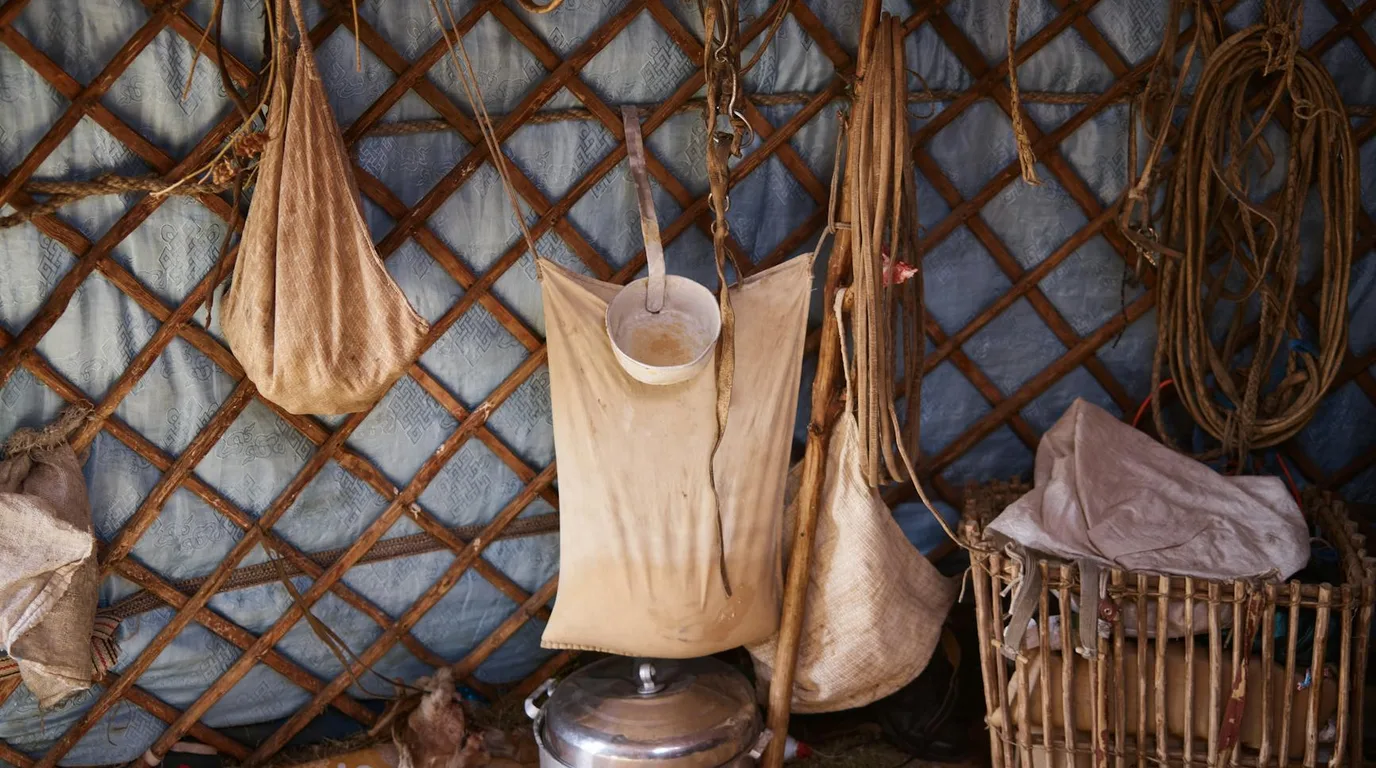
My great-grandmother was born in a yurt. My grandmother was born in a Soviet apartment block. I was born in a hospital. Three generations, three completely different living situations, and yet the yurt still sits at the center of our national identity. It is on our flag. It is erected in every city square during Nauryz. When my family gathers for a toi (celebration), we rent a yurt and set it up in the yard even though there is a perfectly good house ten meters away.
According to UNESCO’s Intangible Cultural Heritage listing, which inscribed the knowledge of Kazakh yurt construction on its Representative List in 2014, the yurt (kiiz uy in Kazakh, meaning “felt house”) has been the primary dwelling of steppe nomads for over 3,000 years.
How a Yurt Works
A yurt looks simple from the outside. Inside, it is an engineering solution to a specific problem: how to build a comfortable, portable home that can withstand -30°C winters and +40°C summers on the open steppe.
The Components
| Part | Kazakh name | What it does |
|---|---|---|
| Crown wheel | Shanyrak | Circular top ring. Lets in light and smoke. Holds the entire structure together. |
| Roof poles | Uyk | Curved wooden poles connecting wall lattice to the shanyrak. 60-100 per yurt. |
| Wall lattice | Kerege | Expandable criss-cross wooden frame forming the walls. Collapses for transport. |
| Felt covers | Kiiz | Thick sheep wool felt layers. The insulation. |
| Door frame | Bosaga | Carved wooden door. According to tradition, always faces south or southeast. |
| Binding ropes | Bau | Woven decorative bands that secure felt to frame. |
Assembly and Transport
According to ethnographic research by the Kazakh National Museum:
- Assembly time: A practiced family sets up a yurt in 1-2 hours
- Disassembly: Under 1 hour
- Transport load: Fits on 2-3 camels or horses (150-250 kg total)
- Size range: 4-8 meters in diameter. A large yurt comfortably holds 15-20 people.
- Lifespan: A well-maintained yurt lasts 20-30 years with felt replacement every 5-7 years
The genius is in the kerege (wall lattice). According to Britannica’s entry on the yurt, the structure has been used by nomadic peoples across the Eurasian steppe for at least 2,500 years, with the design remaining remarkably consistent because it represents an optimal solution to the demands of pastoral nomadic life. Each section of the kerege is made of willow strips drilled at crossing points and connected with rawhide. The lattice expands like an accordion for setup and collapses flat for transport. No nails. No screws. No tools needed for assembly.
The Shanyrak: Kazakhstan’s Most Sacred Symbol
The shanyrak (the round crown wheel at the top of the yurt) is more than architecture. According to Kazakh cultural anthropologist Dr. Nurlan Alimzhanov, it is the single most important symbol in Kazakh identity:
- It appears on the Kazakhstan flag as the golden circle, representing home and hearth
- Family shanyraks are inherited, passed from father to eldest son for generations
- “Shanyrak qoteru” (raising the shanyrak) means founding a new household. It is said at weddings.
- Destroying a shanyrak was historically the gravest insult you could inflict on a Kazakh family
- National meaning: The shanyrak on the flag represents the idea that all Kazakhstanis share one home under one sky
When I first moved away from Kazakhstan, the thing I missed was not the food or the language. It was the feeling of sitting inside a yurt and looking up through the shanyrak at the stars. There is no architectural equivalent anywhere else.
Inside the Yurt
The interior follows strict rules that have not changed in centuries. According to UNESCO’s documentation:
Facing the door (south):
- Tor - the place of honor, directly opposite the entrance. The most respected guest sits here.
Right side (entering):
- Women’s area. Kitchen equipment, food storage, cooking. According to tradition, the woman of the house manages this side.
Left side:
- Men’s area. Historically: weapons, saddles, horse equipment. Today: storage, seating for male guests.
Center:
- The hearth (oshaq). Historically a fire pit, now often a metal stove. The heart of the home. According to Kazakh belief, the fire in the center of the yurt represents the family’s life force.
Walls:
- Decorated with tuskiiz (embroidered wall hangings), syrmaq (felt carpets with traditional patterns), and alasha (woven bands). According to textile scholars at the Kasteyev State Museum of Arts, these decorations can take months to produce and are passed down as family treasures.
The circular layout means everyone can see everyone. There are no private rooms, no hidden corners. According to anthropological analysis, this reinforced communal values: secrets were difficult, shared experience was the default.
Where to Stay in a Yurt
Tourist yurt camps have become one of Kazakhstan’s best accommodation experiences. According to booking platforms:
| Location | Experience | Season | Price range |
|---|---|---|---|
| Kolsai Lakes area | Mountain yurt camp, horse riding, hiking | May-September | $30-80/night |
| Near Charyn Canyon | Steppe yurt, stargazing, silence | April-October | $25-60/night |
| Altyn-Emel National Park | Singing Dunes, wildlife, desert steppe | May-September | $30-70/night |
| Turkestan region | Cultural heritage, historical sites | Year-round | $20-50/night |
| Kazakh steppe (various) | Pure nomadic experience, remote | June-August | $40-100/night |
What is included: Most yurt stays include dinner and breakfast - usually beshbarmak or plov for dinner, bread and tea for breakfast. Some offer horse riding, eagle demonstrations, and kumis tasting.
What to expect: Real yurts, not glamping tents. Shared toilet facilities (sometimes a pit latrine). No wifi in remote locations. Cold at night even in summer - bring layers. The tradeoff: complete silence, a sky full of stars, and an experience that connects you to 3,000 years of steppe living.
Modern Yurt Culture
Yurts have not disappeared. According to the Kazakh National Statistics Agency (stat.gov.kz), over 40,000 yurts are estimated to be in use across the country. According to Wikipedia’s entry on the yurt, the word itself comes from the Turkic term for homeland or dwelling place, and the structure is recognized as a shared symbol of nomadic heritage across Kazakhstan, Kyrgyzstan, and Mongolia:
Celebrations. During Nauryz (March 22), every city and village erects yurts for communal feasting. Almaty sets up hundreds in parks. The yurt becomes a symbol of national identity renewal.
Weddings and toi. Many families rent or own a yurt for celebrations. Even wealthy urban families who live in apartments will set up a yurt for a wedding feast. According to event planners I have spoken with, yurt rental for events costs 50,000-200,000 KZT ($100-400) depending on size and decoration.
Architecture. Modern Kazakh architecture frequently references yurt forms:
- Khan Shatyr in Astana is the world’s largest tent-like structure, directly inspired by the yurt
- The Kazakh Eli monument in Astana features a giant shanyrak
- Almaty airports and Astana train station incorporate yurt-shaped design elements
How Yurts Are Built
According to the Institute of Archaeology named after Margulan, excavations of Bronze Age settlements on the Kazakh steppe have uncovered structural remains indicating that portable felt dwellings were in use as early as the 2nd millennium BCE, predating written historical records. According to master yurt-maker (sheber) Talgat Zhunisbekov, documented in the UNESCO inscription file:
- Willow harvest. Young flexible willow branches are cut, stripped, and dried for the kerege lattice and uyk roof poles.
- Bending and shaping. Poles are steamed and bent into curves using traditional wooden forms.
- Lattice assembly. Strips are drilled at crossing points and connected with rawhide thongs. Each section is tested for even expansion.
- Shanyrak carving. The crown wheel is carved from a single piece of hard wood (elm or birch). According to Zhunisbekov, this is the most skilled step.
- Felt production. Sheep wool is washed, dried, beaten, and rolled into thick felt sheets. A community of women typically works together on this.
- Decoration. Women create the textile elements: embroidered tuskiiz, felt syrmaq carpets with traditional patterns (ram’s horns, sun motifs, water patterns).
The entire process from raw materials to finished yurt traditionally took several weeks of community effort. According to the UNESCO Intangible Cultural Heritage assessment, this communal production reinforces social bonds and transmits cultural knowledge across generations.
Yurt Etiquette and Guest Customs
Entering a Kazakh yurt for the first time comes with a set of unwritten rules that every guest is expected to follow. Understanding them transforms the visit from a tourist photo stop into a genuine cultural exchange. According to ethnographer Aigul Bekova, whose research is published by the Institute of Literature and Art in Almaty, these customs have been observed consistently across the steppe for centuries and remain alive in contemporary Kazakh culture.
At the door:
- Always enter with your right foot first. Stepping over the threshold with the left foot is considered inauspicious.
- Duck and step over the bottom of the door frame, never step on it. The frame (bosaga) represents the family’s stability.
- If you arrive on horseback, tie your horse to the left of the entrance.
Finding your seat:
- Tor (the back wall, opposite the door) is reserved for the eldest guest or the person of highest status. Do not sit there unless invited.
- Men typically sit on the left side, women on the right. In informal modern settings this division is relaxed, but in traditional households it is observed.
- Never sit with your back to the elder or the hearth.
- Sit cross-legged or kneel, not with legs stretched toward the fire or toward an elder.
Receiving food and drink:
- Accept kumis (fermented mare’s milk) or tea with both hands or with the right hand supported by the left at the elbow. Receiving with one hand is considered rude.
- The host will refill your bowl continuously. Placing your palm over the cup signals you have had enough.
- The best cut of meat, especially the head of a sheep (koydin basy), is offered to the most honored guest. Accepting and responding graciously matters more than eating every piece.
- Do not refuse food offered by the host. A small taste is always appropriate even if you are not hungry.
General conduct:
- Whistling inside a yurt is traditionally forbidden; it was believed to summon bad spirits.
- Do not point at people or objects with a single finger; use an open palm instead.
- Loud disputes or arguments inside a yurt are considered a serious breach of hospitality norms. The yurt is a space of peace.
- When leaving, say your farewells standing near the door rather than from across the room.
According to Kazakhstan traditions scholars at Al-Farabi Kazakh National University, these customs collectively reinforce the nomadic value of hospitality (konakjailyq), which holds that a guest, even a stranger, must be received as a gift. The phrase “Konaq qudai qonaqy” (a guest is God’s guest) remains in everyday use.
Staying in a Yurt: Tourist Experiences Near Almaty and Kolsai
Yurt tourism in Kazakhstan has grown significantly since 2018, with the largest concentration of quality camps within a 3-hour drive of Almaty. According to data from Kazakhstan Tourism (kaztourism.kz), domestic and international visitors to yurt camps increased by over 60% between 2019 and 2024, driven by growing interest in authentic cultural experiences and post-pandemic travel to off-grid destinations.
Yurt Camps Near Almaty (within 200 km)
The Ile-Alatau National Park corridor and the Charyn Canyon area offer yurt stays accessible as day trips or overnight excursions from Almaty. Most camps are 1.5 to 3 hours from the city by car.
| Camp area | Distance from Almaty | Highlights | Price per night (USD) |
|---|---|---|---|
| Charyn Canyon | 195 km (2.5 hrs) | Steppe yurt, canyon sunrise, silence | $25-55 |
| Kaindy Lake | 270 km (3 hrs) | Mountain setting, sunken forest nearby | $35-65 |
| Turgen Gorge | 80 km (1 hr) | Waterfalls nearby, beginner-friendly | $30-60 |
| Big Almaty Lake area | 30 km | Alpine backdrop, quick access | $40-80 |
Prices are per person and typically include dinner and breakfast. Most camps add horse riding packages for $15-30 per hour. Booking through Booking.com or direct WhatsApp contact is standard.
Kolsai Lakes Yurt Camps
The Kolsai Lakes area (280 km southeast of Almaty) is Kazakhstan’s most scenic yurt destination. Three glacial lakes sit at different elevations in a forested canyon of the Tian Shan range, and yurt camps operate on the shores of the lower and middle lakes.
What to expect at Kolsai:
- Yurt camps are family-run, typically 5-15 yurts per camp
- Meals are home-cooked: beshbarmak, lagman, freshly baked bread, and tea with cream
- Horse riding to the upper lake is available for $20-40 per day with a guide
- No mobile signal beyond the lower lake, limited electricity (solar or generator)
- Season: late May to early October. July and August are peak weeks; book 2-4 weeks ahead.
- Average price: $40-70 per person per night including meals
Practical booking note: As of March 2026, most Kolsai yurt camps do not have English-language websites. The most reliable approach is searching Booking.com for “Kolsai Lakes yurt” or asking your Almaty hotel or guesthouse to make a local call. Some camps are listed on Airbnb under “Kolsai.”
What a Yurt Stay Actually Looks Like
A typical overnight at a quality tourist camp in Kazakhstan runs roughly like this: you arrive in the late afternoon, are welcomed with tea and baursak (fried bread), shown to your yurt, and left to settle in. Dinner around a communal table or inside a large yurt follows, usually with other guests. In the evening the host may bring out a dombra (two-stringed instrument) or show how to make felt. You sleep on a tushak (folded felt mattress) on the floor under several blankets.
Temperatures drop sharply after sunset even in summer at altitude. Kolsai camps sit at 1,800-2,200 m above sea level; summer nights regularly reach 5-10°C. Bring a warm layer regardless of the daytime forecast.
For a broader view of what else to combine with a yurt stay, see the things to do in Kazakhstan guide, which covers itinerary planning from the steppe to the mountains.
Frequently Asked Questions
- What is a Kazakh yurt called?
- According to UNESCO's Intangible Cultural Heritage documentation, the Kazakh name is kiiz uy, meaning 'felt house.' The word 'yurt' comes from Turkic languages and originally meant 'homeland' or 'dwelling place.' Kazakhs prefer the term kiiz uy as it accurately describes the structure.
- How long does it take to set up a yurt?
- According to ethnographic research at the Kazakh National Museum, an experienced family assembles a yurt in 1-2 hours and disassembles it in under 1 hour. The entire structure including felt, lattice, and furnishings fits on 2-3 camels for transport.
- Can you stay in a yurt in Kazakhstan?
- Yes. Tourist yurt camps operate near Kolsai Lakes, Charyn Canyon, Altyn-Emel, and other locations from May to September. Prices range from $25-100 per night, typically including dinner and breakfast. Many camps offer horse riding and cultural activities.
- Why is the shanyrak on Kazakhstan's flag?
- According to the state symbols commission, the shanyrak (circular crown of the yurt) represents home, family, and the shared homeland of all Kazakhstanis. It is the most sacred element of the yurt, passed down through generations, and symbolizes unity under one sky.
- How warm is a yurt in winter?
- According to traditional construction standards, a yurt with multiple felt layers and a central stove can maintain comfortable temperatures at -30°C. The thick felt insulates against both cold and heat. In summer, the bottom felt panels can be lifted for ventilation.
- Are yurts still used as homes in Kazakhstan?
- According to the National Statistics Agency, over 40,000 yurts are in use. Most serve ceremonial purposes (Nauryz, weddings, celebrations) or tourist accommodation rather than permanent housing. Some herders in remote areas still use yurts as seasonal summer dwellings.
Last verified: March 2026
More Stories
culture
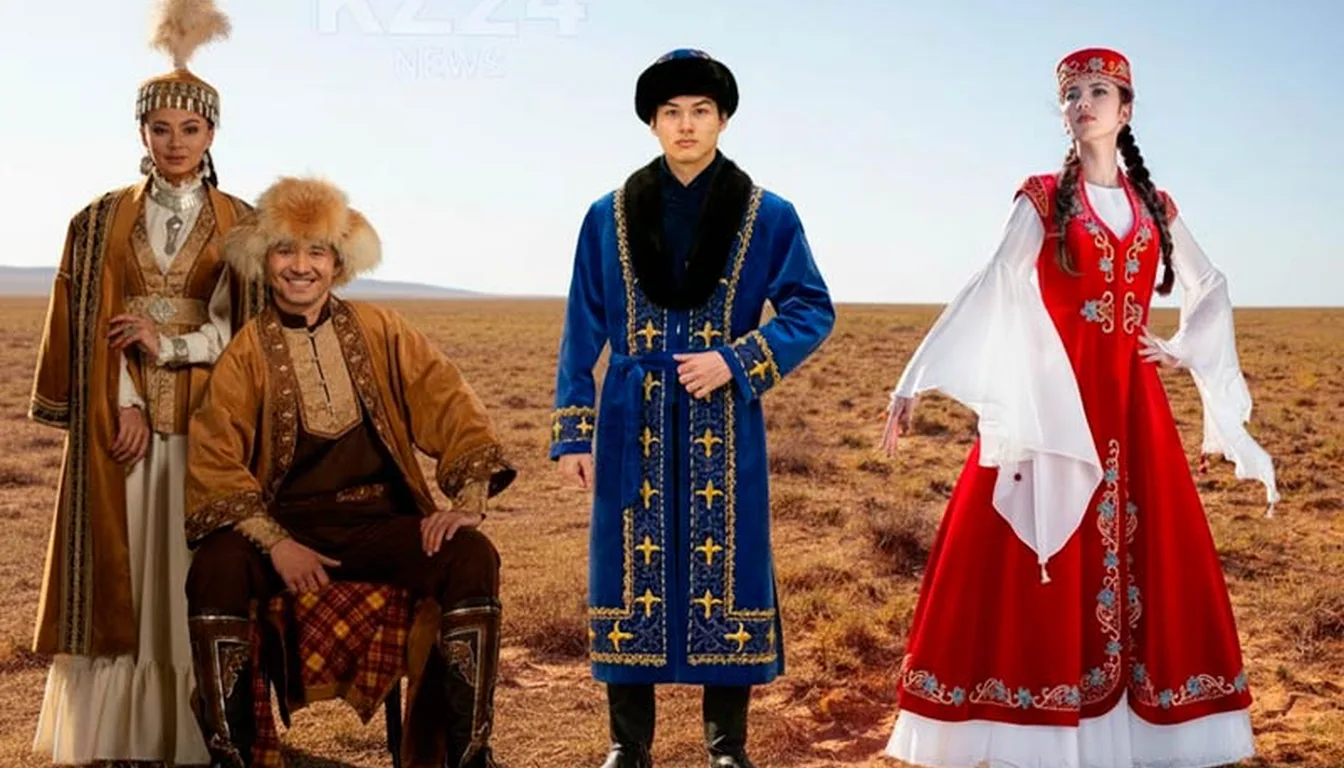
Kazakhstan Traditional Clothing: Chapan, Saukele & Tymak Guide (2026)
Complete guide to Kazakhstan traditional clothing: chapan robes, saukele headdresses, tymak fur hats. History, meaning, and where to buy authentic pieces.
history
Kazakh Khanate (1465-1847): Complete History of 15 Khans & 3 Juz
Kazakh Khanate: founded 1465 by Janibek and Kerei Khan. 382-year nomadic empire, Golden Age under Kasym Khan, three juz system, Russian annexation 1847.

culture
Kazakh Language: 40+ Phrases, Pronunciation & Kazakh vs Russian (2026)
Learn 40+ essential Kazakh phrases with pronunciation. When to use Kazakh vs Russian, Cyrillic-to-Latin script change, and why locals appreciate it.