Beshbarmak: How Kazakhstan's National Dish Is Really Made and Eaten
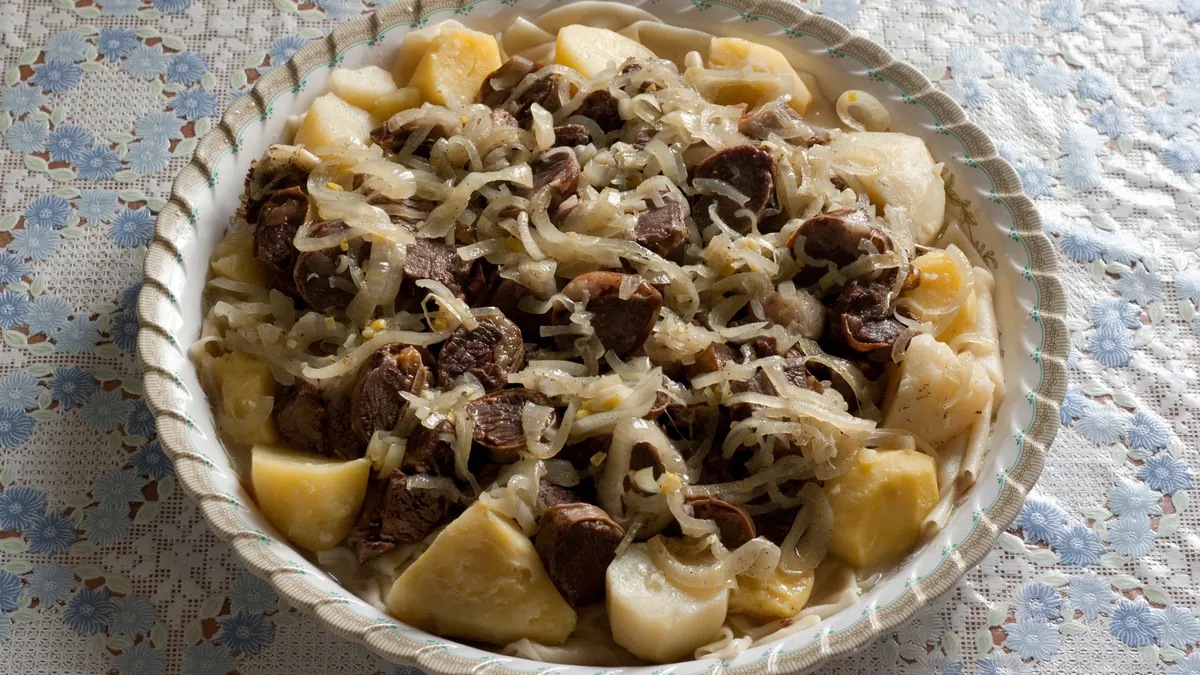
The last time I ate beshbarmak at my grandmother’s house in Aktobe, there were eleven of us around one plate. My grandmother carved the meat and placed specific cuts in front of specific people without saying a word. Everyone knew the protocol. The oldest man got the thigh bone. The daughter-in-law got the breast. The children fought over the marrow. My grandmother ate last, from whatever was left, and somehow looked satisfied with the arrangement.
That is beshbarmak. Not just food. A social operating system built on a plate.
What Beshbarmak Actually Is
Beshbarmak is Kazakhstan’s national dish: slow-boiled meat (horse, lamb, or beef) served on wide flat noodles and topped with a broth-soaked onion sauce called tuzdyk. It is eaten from a communal plate, often by hand, and every element of how the dish is prepared, served, and distributed carries social meaning.
The name means “five fingers” in Kazakh because the dish is traditionally eaten by hand. According to the Kazakh Cultural Heritage Foundation, beshbarmak has been the centerpiece of Kazakh feasts for at least 500 years, and likely much longer. According to the Kazakhstan Ministry of Agriculture, approximately 130,000 tonnes of horse meat are produced annually in Kazakhstan, with an estimated 40% consumed as part of beshbarmak and related dishes. The average Kazakh family prepares beshbarmak 2-3 times per month, making it the most frequently cooked traditional dish in the country.
The components are simple:
- Meat. Horse meat (the most traditional), lamb, or beef. Always bone-in. Boiled for 2-3 hours until it falls apart.
- Noodles. Large, thin, square sheets of dough, boiled in the meat broth.
- Tuzdyk. Sliced onions soaked in hot broth with black pepper. This is the sauce.
- Sorpa. The broth itself, served alongside in bowls.
That is it. Four components. The magic is in the execution and the ritual around it.
The Meat Distribution Protocol
At a Kazakh feast, the host does not simply put food on the table. Each cut of meat is assigned to a specific guest based on age, gender, and social standing. This distribution ritual, called ustakan tartu, can take 20 minutes at a formal gathering and communicates volumes about how the family regards each person present.
This is what no recipe blog tells you. According to Kazakh ethnographer Dr. Askar Zhumadil (published in “Qazaq Damdy” / Kazakh Flavors), the host carves the meat and distributes specific cuts based on the guest’s status. This is called ustakan tartu and it can take 20 minutes at a formal gathering.
| Cut | Kazakh name | Given to | Why |
|---|---|---|---|
| Head | Bas | Most honored elder male | Highest respect. The guest carves it further and distributes pieces. |
| Hip/thigh | Jambas | Important male guests | Represents strength |
| Spine | Omyrtqa | Married women | Represents the backbone of family |
| Breast | Tos | Daughter-in-law (kelin) | Represents generosity |
| Shin bone | Jilik | Children | Marrow inside is nutritious for growing kids |
| Ribs | Qabyrga | General guests | Good meat, no special status |
| Pelvis | Jauryn | Young men | Represents future strength |
Getting the bas (head) is the highest honor a Kazakh host can give. According to tradition, refusing it is a serious insult. If you are a foreign guest and the host presents you with a sheep’s head, smile, accept it, and eat what you can. Ask your neighbor how to carve it if you are unsure.
How Beshbarmak Is Prepared
Making beshbarmak is a half-day commitment. The meat simmers for 2.5 to 3 hours in a large kazan (a heavy cast-iron cauldron), the noodle dough is rolled paper-thin by hand, and the onion sauce is softened in hot broth at the last moment. The process is not complicated, but it cannot be rushed.
I will give you the recipe my grandmother uses. It is not precise because she has never measured anything in her life.
Ingredients (8-10 people)
- 2 kg bone-in lamb or beef (shoulder, ribs, or mixed cuts)
- 500g flour
- 2 eggs
- 3 large onions, sliced into half-rings
- Salt, black pepper
- Water
Steps
1. The meat (start 3 hours before eating)
Put the meat in a large pot (Kazakhs use a kazan). Cover with cold water. Bring to a boil. Skim the foam carefully for the first 10 minutes. Add salt. Reduce heat. Simmer for 2.5-3 hours.
According to my grandmother: “The meat is ready when the bone is loose.” If you have to pull hard, keep cooking.
2. The noodles (start 1 hour before eating)
Mix flour, eggs, a pinch of salt, and enough cold water to make a stiff dough. Knead hard for 10 minutes. It should be elastic and smooth. Rest under a towel for 30 minutes. Roll out very thin (2mm or less). Cut into squares roughly 10x10 cm.
According to tradition, the noodles should be thin enough to see light through them. Thick noodles are considered lazy cooking.
3. The tuzdyk (15 minutes before eating)
Slice onions into half-rings. Ladle hot broth over them in a bowl. Add black pepper. Let them soften for 15 minutes. They should be wilted but not fully cooked.
4. Assembly
Boil the noodle squares in the meat broth for 3-4 minutes. Remove with a slotted spoon to a large round platter (tabaq). Layer them flat. Place the carved meat on top. Pour the tuzdyk over everything. Serve the sorpa (broth) in individual bowls alongside.
Tips for authentic results
- Bone-in is non-negotiable. According to food scientist Harold McGee (On Food and Cooking), bones release gelatin during long simmering, which gives the broth its body and richness. Boneless meat produces thin, flat-tasting broth.
- Horse meat gives the most authentic flavor. If unavailable, lamb is the best substitute. Beef works but lacks the distinctive sweetness.
- Do not overcook noodles. They should hold their shape. Mushy noodles are the #1 amateur mistake.
- Serve immediately. Beshbarmak does not hold or reheat well. The noodles absorb broth and get soggy.
How to Eat Beshbarmak
Beshbarmak is eaten from a shared round platter called a tabaq, using the fingers of the right hand to gather noodles and meat together into a single bite. Forks are acceptable in urban restaurants, but at a family gathering in a rural home, eating by hand is expected. It signals respect for the tradition and comfort with the hosts.
Traditionally: with your hands. All five fingers. From a communal plate.
In modern urban Kazakhstan, forks exist and nobody will judge you. But at a traditional gathering in a rural home, using your hands is expected and appreciated.
According to etiquette documented by the Kazakh National Museum:
- Eat from the portion of the plate closest to you
- Do not reach across to someone else’s section
- Take meat offered to you by the host. Do not choose your own cuts.
- Drink the sorpa between bites. It is not a separate course.
- Compliment the cook. Loudly. Multiple times.
Regional Variations
Beshbarmak is not one fixed recipe. Across Kazakhstan’s vast geography, the dish changes significantly based on what livestock or fish was historically available and what Russian, Chinese, or Persian culinary influences shaped each region. The four main regional styles vary in protein, seasoning, and presentation.
According to the Kazakh Culinary Association and ethnographic sources:
| Region | Variation | What is different |
|---|---|---|
| Western Kazakhstan (Atyrau, Mangystau) | Fish beshbarmak | Caspian Sea sturgeon or catfish instead of meat |
| Southern Kazakhstan (Shymkent area) | More horse meat, spicier tuzdyk | Closer to traditional nomadic preparation |
| Northern Kazakhstan | Beef-heavy, sometimes with potatoes | Influenced by Russian cuisine |
| Urban Kazakhstan | Individual plating, smaller portions | Modern restaurant adaptation |
The fish beshbarmak from western Kazakhstan deserves special mention. According to locals, it is equally traditional - the Caspian coast Kazakhs were fishers, not herders. Different protein, same ritual.
The Dastarkhan: Beshbarmak Serving Traditions
The dastarkhan is the low table or floor cloth around which guests gather for a Kazakh feast. Beshbarmak does not appear at the start. It arrives as the centrepiece after rounds of tea, baursak (fried dough), and cold appetisers. The moment the large tabaq (round platter) is carried in, the gathering enters its most important phase, and every action from that point is governed by custom described in the Kazakh cultural traditions of hospitality.
The size of the tabaq signals the scale of the occasion. At a large celebration, a single tabaq may hold an entire sheep. At a smaller family dinner, a half-portion suffices. The host never eats until every guest is served.
Seating by hierarchy. Guests are seated in order of seniority, with the eldest furthest from the entrance (the place of honour, called tor). The host sits nearest the door, the most humble position, because a host’s role is to serve. According to Kazakh cultural practice, a guest seated at tor is expected to lead the bata (blessing prayer) before eating begins.
The bata before eating. A brief prayer in Kazakh is spoken by the most senior person before hands touch the food. The bata thanks God, blesses the hosts, and wishes health on the household. Even in secular urban families, some form of blessing or toast precedes the first bite.
Meat carved at the table. The host, or a designated male elder, carves the meat from the bone at the table using a small sharp knife. Bones are never discarded; they are placed on the edge of the tabaq and picked clean by hand. According to food anthropologist notes in “Nomadic Foodways of Central Asia” (University of Almaty Press, 2019), leaving meat on the bone is considered wasteful and disrespectful to the animal and the host.
Sorpa as punctuation. The broth is sipped from bowls throughout the meal, not as a separate course. It cleanses the palate between bites and, according to Kazakh folk medicine, aids digestion of the heavy meat. Guests who want more broth hold out their bowl; the host refills without being asked.
Leftovers and the dogdy bag tradition. At the end of a formal gathering, the host often wraps leftover meat for guests to take home. Refusing is impolite. Accepting and eating it the next day (cold beshbarmak with bread is a recognised breakfast) is considered a compliment to the cook.
Beshbarmak vs Other Central Asian Meat Dishes
Central Asia has several iconic meat-and-starch combinations, and visitors frequently ask how beshbarmak differs from plov, laghman, or manty. The short answer: the cooking method, the starch, and the social context are entirely different. Beshbarmak is the only one designed explicitly as a communal, ceremonial feast dish rather than everyday food.
Understanding the differences helps when ordering in a restaurant that serves all four on the same menu:
| Dish | Origin | Starch | Cooking method | Context |
|---|---|---|---|---|
| Beshbarmak | Kazakh / Kyrgyz steppe | Wide flat noodles | Boiled in broth | Ceremony, celebrations, feasts |
| Plov | Uzbek (Ferghana Valley) | Rice | Fried then steamed in kazan | Everyday + weddings |
| Laghman | Uyghur / Dungan | Hand-pulled noodles | Stir-fried or broth-based | Everyday restaurant food |
| Manty | Shared Turkic tradition | Dough wrapper (dumpling) | Steamed | Family meals, dumplings course |
Plov is the most common dish across all of Central Asia. In Kazakhstan it is eaten regularly, whereas beshbarmak is reserved for occasions. The fat content in plov comes from cottonseed or lamb tail fat fried with carrots and onions; in beshbarmak the fat comes entirely from slow-boiled bone marrow and meat.
Laghman is the everyday noodle dish of the Uyghur and Dungan communities concentrated around Almaty and the Ili Valley. The noodles are stretched by hand into long thin strands, then stir-fried or served in a thick broth with vegetables and mutton. Texture and flavour are closer to Chinese noodle dishes than to beshbarmak.
Manty share the boiled-dough DNA with beshbarmak but exist as a separate course. According to manty preparation traditions, the dumplings are steamed over broth, filled with minced lamb and onion, and eaten with sour cream or a vinegar dip. At large Kazakh gatherings, manty may appear as a starter before beshbarmak arrives as the main course.
The clearest way to think about it: plov and laghman are what Kazakhs eat on a Tuesday. Beshbarmak is what they cook when you matter.
Where to Try Beshbarmak
The most authentic beshbarmak is served in Kazakh homes during celebrations such as Nauryz, weddings, or when welcoming important guests. In restaurants, expect to pay 2,500 to 5,000 KZT (roughly $5 to $10 USD) for a full portion in Almaty or Astana. Quality varies widely, so the right restaurant matters.
The best beshbarmak is in someone’s home. If you are invited to a Kazakh family dinner, the probability of beshbarmak being served approaches 100%.
In restaurants:
| City | Restaurant | Price (KZT) | Notes |
|---|---|---|---|
| Almaty | Zheti Kazyna | 3,500 | Traditional preparation, large portions, horse meat available |
| Almaty | Alasha | 4,500 | Upscale Kazakh dining, excellent quality, central location |
| Almaty | Green Bazaar food stalls | 1,800 | Cheap, authentic, no frills, lamb only |
| Astana | Kishlak | 3,200 | Popular with locals for family dinners, horse meat standard |
| Astana | Beshbarmak House | 2,800 | Specialises exclusively in the dish, multiple meat options |
| Shymkent | Any local restaurant | 2,000 | Southern Kazakhstan generally produces the most traditional version |
Prices are approximate as of early 2026. A portion typically feeds one person as a main course; at home the same quantity would serve two to three at a shared table.
If you are visiting Almaty on a food-focused trip, combine a beshbarmak meal with a visit to the Green Bazaar to see the raw ingredients: whole horse carcasses hanging alongside lamb, the giant round platters stacked by the kitchen supply stalls, and the thick noodle sheets sold fresh by the weight.
Other Dishes to Try With Beshbarmak
A proper Kazakh feast rarely stops at beshbarmak. The dish is the centrepiece, not the entirety. Before and after it, expect fried bread, cured meats, fermented dairy, and dumplings. Understanding the full spread helps you navigate the table without missing the best parts of Kazakh food culture.
A proper Kazakh meal rarely stops at beshbarmak. According to Kazakh food traditions and Britannica’s entry on Kazakh cuisine:
- Baursak - fried dough balls, served at every celebration. Tear off pieces and eat with meat.
- Kazy - horse meat sausage, sliced thin. Rich and fatty.
- Kumis - fermented mare’s milk. The traditional drink pairing.
- Kurt - dried salty yogurt balls. The original steppe snack, carried in saddlebags for months without refrigeration.
- Manty - steamed dumplings, sometimes served before or alongside beshbarmak.
Frequently Asked Questions
- What does beshbarmak mean?
- According to the [Kazakh Cultural Heritage Foundation](https://e-heritage.kz/), beshbarmak means 'five fingers' in Kazakh and other Turkic languages because the dish is traditionally eaten by hand from a communal plate. [Wikipedia's beshbarmak article](https://en.wikipedia.org/wiki/Beshbarmak) traces the dish across Kyrgyz, Kazakh, and Bashkir traditions.
- What meat is used in beshbarmak?
- Traditional beshbarmak uses horse meat or mutton. According to the Kazakh Culinary Association, beef is common in modern preparation, and western Kazakhstan uses fish from the Caspian Sea. The meat must be bone-in and boiled for 2-3 hours.
- Is beshbarmak healthy?
- Beshbarmak is high in protein and calories. According to nutritional analysis, a single serving can contain 800-1,200 calories. It was designed for life on the cold steppe where high caloric intake was necessary for survival. The bone broth provides collagen and minerals.
- Where can I try beshbarmak?
- The best beshbarmak is served in Kazakh homes during family gatherings. In restaurants, Zheti Kazyna and Alasha in Almaty are recommended. The Green Bazaar food stalls serve affordable versions. Southern Kazakhstan, particularly Shymkent, is known for the most traditional preparation.
- How long does beshbarmak take to cook?
- About 3-4 hours total. According to traditional preparation methods, the meat needs 2.5-3 hours of slow simmering. The noodle dough needs 30 minutes rest plus rolling time. Assembly takes 15-20 minutes. This is a special occasion dish, not a weeknight dinner.
- Can you make beshbarmak without horse meat?
- Yes. According to Kazakh cooks, lamb is the best substitute for horse meat. Beef also works but produces a less rich broth. Chicken is sometimes used in modern urban adaptations but is not considered authentic by traditionalists.
Last verified: March 2026
More Stories
food
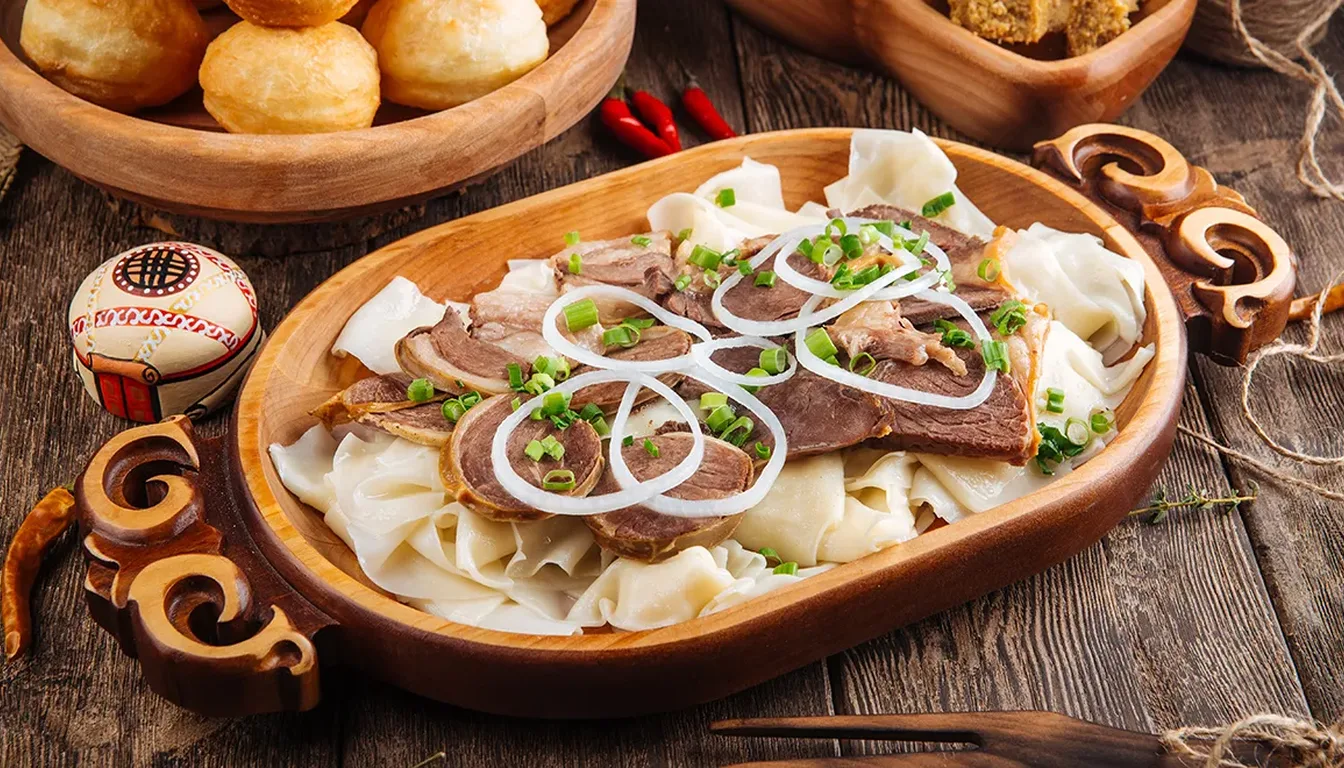
Popular Food in Kazakhstan: Kazakh Cuisine Guide
Popular food in Kazakhstan: 18 must-try dishes from beshbarmak and kazy to kumis and baursaki. Ingredients, cultural meaning, and where to eat each one.
food
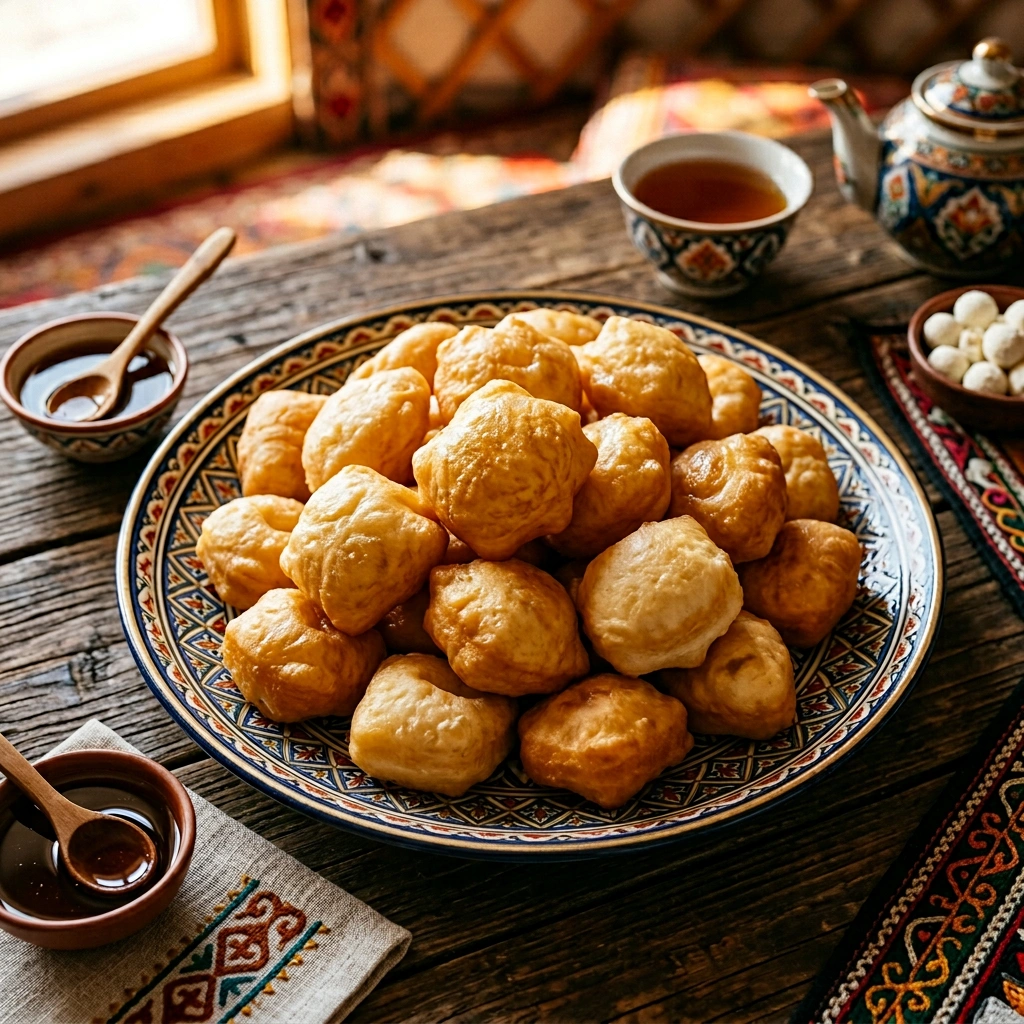
Baursak: Kazakhstan's Golden Fried Bread (History, Recipe, Meaning)
Baursak is Kazakhstan's iconic fried dough served at every celebration. Learn the history, symbolism, classic recipe, regional variations, and cultural role.
food
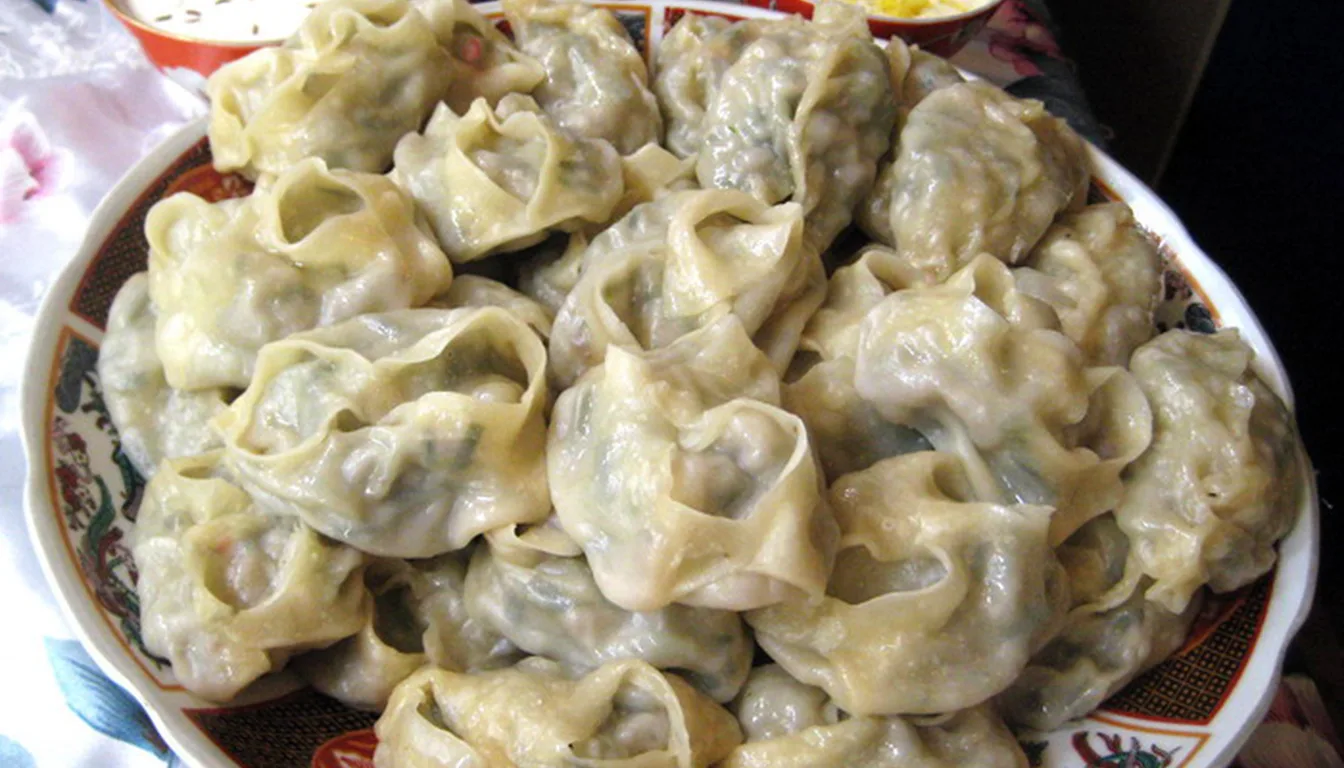
Manty: Kazakh Steamed Dumplings Recipe & Guide
Everything about Kazakh manty — traditional lamb filling, step-by-step recipe, folding technique, regional variations, and where to eat them.