Aktau, Kazakhstan: Caspian Sea City and Mangystau Gateway
Aktau is a port city of 210,000 people on Kazakhstan’s Caspian Sea coast, the capital of Mangystau Region, and the gateway to some of the most dramatic landscapes on Earth. Built in the 1960s as a closed Soviet uranium-mining settlement, Aktau today is Kazakhstan’s fastest-growing tourist destination, ranked in the country’s top 10 most-visited cities. According to Wikipedia’s article on Aktau, the city was founded in 1963 and initially named Shevchenko before being renamed Aktau after independence in 1991. The city offers Caspian Sea beaches, a unique numbered-microdistrict layout with no street names, and serves as the launching point for Mangystau’s Mars-like canyons, underground mosques, and stone valleys that attract adventure travelers worldwide.
Aktau’s name means “White Mountain” in Kazakh, a reference to the white limestone cliffs on which the city stands. Every drop of tap water here is desalinated from the Caspian Sea, making Aktau one of the few cities in the world that runs entirely on processed seawater. According to the Mangystau Regional Akimat, the city’s desalination infrastructure was originally built to support the Soviet nuclear industry and has since been expanded to serve the civilian population. This guide covers what to see in the city, how to explore the Mangystau desert beyond it, where to stay and eat, and how to get here.
What to See in Aktau
Aktau is a compact city. Most attractions are walkable or a short taxi ride apart.
The Embankment and Beaches
The Aktau Embankment stretches along the Caspian coast and is the city’s social hub. Evening walks here are a local tradition, with views across the open sea and dramatic sunsets. The beach season runs from late June through September, with water temperatures reaching 23°C (73°F) in peak summer.
Several beaches line the coast, from public sandy stretches to beach clubs with loungers and cafes. Kitesurfing, paddleboarding, yachting, and catamaran rides are available during the warm months.
The Rooftop Lighthouse
One of Aktau’s most distinctive landmarks is the Melovoy (Chalk) Lighthouse, built on top of a residential apartment building. This is not a tourist gimmick: it was a functioning navigation light for Caspian Sea shipping. The chalk cliff below provides a panoramic viewpoint over the sea.
Rock Trail (Skalnaya Tropa)
A coastal walking trail carved into the limestone cliffs near the Melovoy Cape. The trail runs along the shore, offering views of eroded rock formations, sea caves, and the turquoise Caspian. Allow 1-2 hours for the walk.
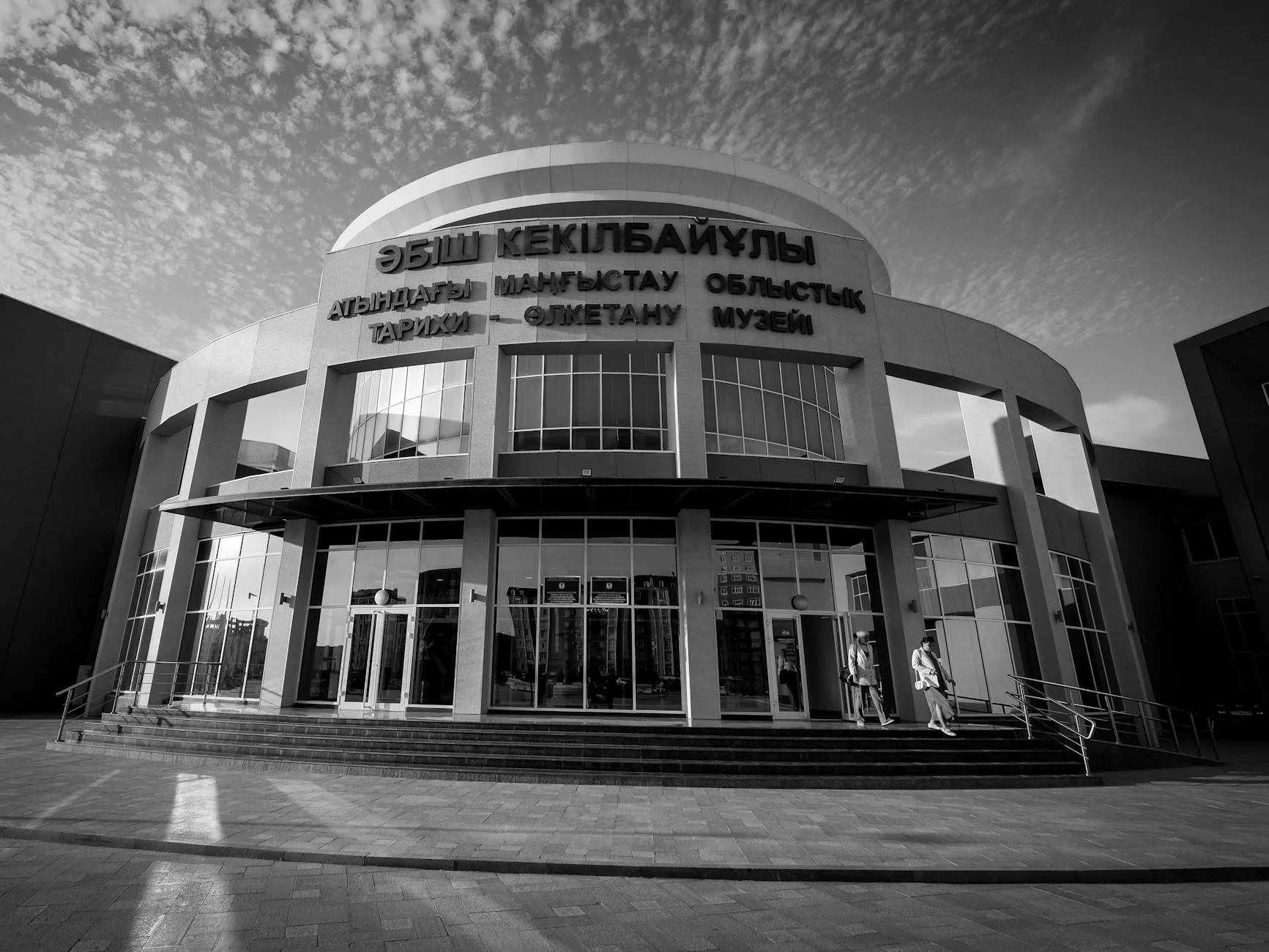
Mangystau Regional Museum
The regional history museum covers local geology, archaeology, ethnography, and the oil industry that shaped modern Aktau. Worth visiting before heading into the desert to understand the ancient seabed geology behind the landscapes you will see.
City Quirks: No Street Names
Aktau uses a Soviet-era numbering system instead of street names. Addresses are given as microdistrict numbers (e.g., “14th Microdistrict, Building 3”). Navigation apps like 2GIS and Yandex Maps work perfectly, but do not try to ask for directions using street names.
Mangystau: The Desert Beyond Aktau
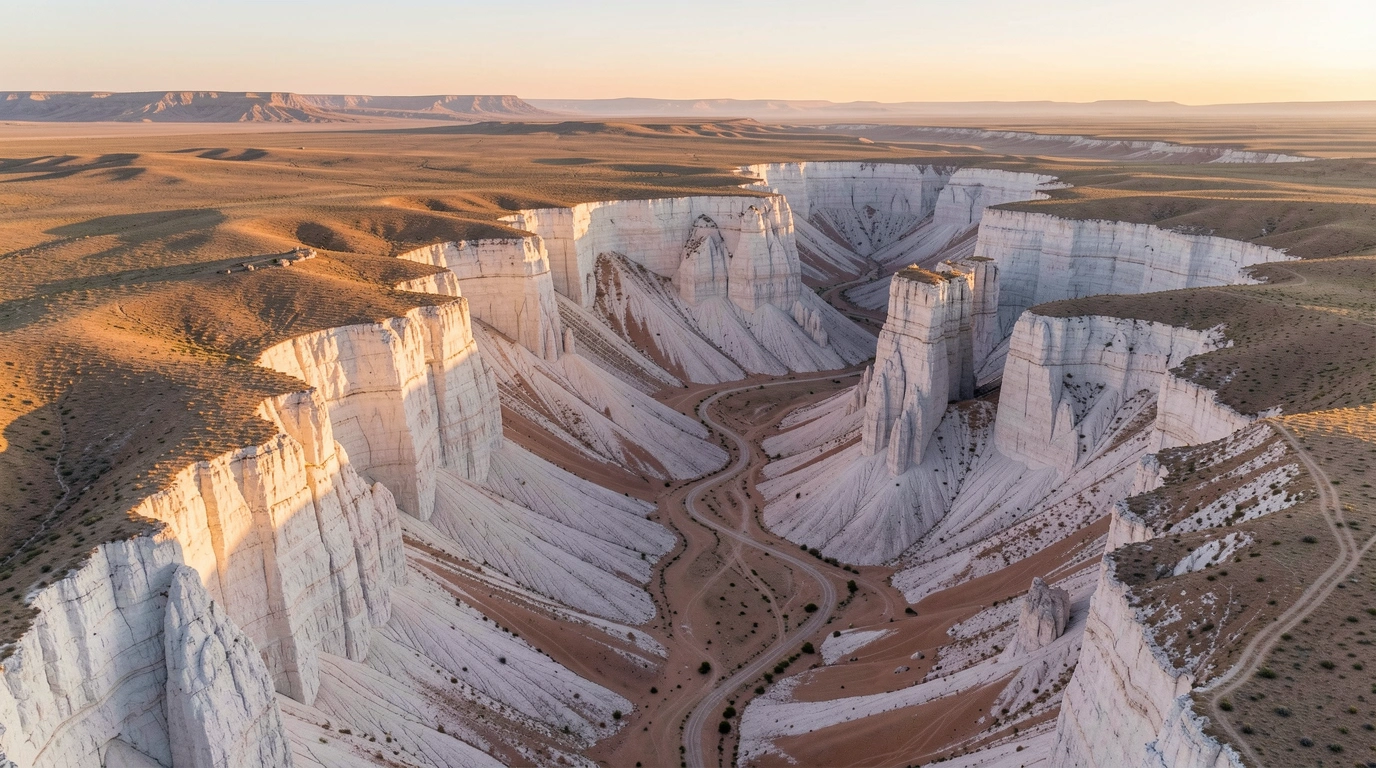
The real reason travelers come to Aktau is Mangystau, a region of otherworldly geology that was the floor of the prehistoric Tethys Ocean. According to the Geological Survey of Kazakhstan, Mangystau’s unique landscape formed over 65-70 million years as ancient seabed sediments were uplifted and eroded by wind and water. Over millions of years, erosion sculpted the dried seabed into canyons, spires, valleys of stone spheres, and underground mosques.
Top Mangystau Destinations
| Destination | Distance from Aktau | What You Will See |
|---|---|---|
| Boszhira | ~300 km | Towering limestone spires, “Mars on Earth” canyons, Dreadnought cliff viewpoint |
| Sherkala Mountain | ~170 km | Fortress-shaped mountain, yurt-like rock formation |
| Torysh (Valley of Balls) | ~170 km | Thousands of giant stone spheres scattered across the steppe |
| Beket-Ata Mosque | ~280 km | Underground mosque carved into rock in the 18th century, major pilgrimage site |
| Shopan-Ata Necropolis | ~250 km | 14th-century underground mosque and necropolis |
| Karagiye Depression | ~50 km | Lowest point in Central Asia at -132 meters below sea level (confirmed by Britannica) |
| Bokty Mountain | ~300 km | Red-and-white striped mountain featured on the 1,000 tenge banknote |
| Tiramisu Hills | ~300 km | Multi-layered reddish canyon formations |
How to Explore Mangystau
Almost all major Mangystau sites require a 4x4 vehicle. There are no paved roads beyond the highway, and distances are vast. Your options:
- Guided 4x4 tours from Aktau (recommended): local agencies run 2-5 day expeditions with driver-guides, meals, camping equipment, and route planning. Expect 70,000-150,000 KZT ($140-300) per person per day for a private tour. Group tours are cheaper.
- Rent a 4x4 and self-drive: possible but risky. Navigation is difficult, there is no phone signal in remote areas, and getting stuck in the desert is a real concern. Only for experienced off-road drivers.
- Day trips from Aktau: Karagiye Depression, Shakpak-Ata Mosque, and Rock Trail are reachable on day trips. The major sites (Boszhira, Torysh, Beket-Ata) require at minimum 2-3 days.
Aktau’s Oil Economy
Aktau is the economic capital of Kazakhstan’s Caspian energy sector, home to the country’s largest offshore oil operations and a logistics hub for pipeline infrastructure connecting Central Asia to Europe.
The city’s modern prosperity is built on oil. The Tengiz, Kashagan, and Karachaganak fields, operated by international consortiums including Chevron, Shell, ExxonMobil, and KazMunayGas, produce the bulk of Kazakhstan’s 85 million tonnes of annual crude output, according to the Ministry of Energy of Kazakhstan. Aktau’s port handles a significant share of that crude, loading tankers destined for the Baku-Tbilisi-Ceyhan pipeline and onward to global markets.
This energy wealth is visible in the city. Aktau has newer infrastructure than most Kazakhstani cities of similar size, including a repaved embankment, modern hotels, and a functioning desalination plant upgraded in the 2000s. Salaries in the oil sector average significantly above the national median, which drives demand for restaurants, hotels, and services that benefit travelers. The Rixos Water World, the only all-inclusive resort in Kazakhstan, exists here because Aktau’s oil workers and their international colleagues created the market for it.
For travelers, the practical implication is that Aktau is more expensive than most Kazakhstani cities outside Almaty and Astana, but also more polished. Expect well-maintained roads, reliable utilities, and staff at hotels and restaurants accustomed to international guests. English is more widely spoken here than in comparable-sized cities elsewhere in Kazakhstan, due to the oil industry’s international workforce.
Aktau is also part of Kazakhstan’s broader cities network and is a model for how resource revenues can be invested in livable urban infrastructure when managed consistently over decades.
Caspian Sea Beaches and Swimming
The Caspian Sea at Aktau is warm, calm, and swimmable from late June through September, with water temperatures reaching 23-24°C (73-75°F) at peak summer, making Aktau the closest thing Kazakhstan has to a beach resort destination.
The Caspian is a landlocked salt lake, not a sea in the oceanographic sense, which gives it distinct characteristics. There are no tides and minimal wave action, meaning the water is usually calm enough for children and casual swimmers. The salinity is lower than oceanic seawater, roughly one-third of ocean salinity according to oceanographic data published by UNESCO, making it gentle on skin and eyes.
Aktau’s main beaches run along the embankment and extend south of the city. The central beach area near the 17th Microdistrict is free and public, with food stalls and equipment rentals nearby. Private beach clubs (Caspian Beach Club, Club Med-style setups at the Rixos) offer loungers, umbrellas, showers, and food service for a day fee of 2,000-5,000 KZT ($4-10). Kitesurfing is popular in spring and autumn when the wind is consistent; the flat water and steady Caspian wind make conditions good for beginners.
The beach season is short but intense. July and August see the city fill with domestic tourists from Almaty, Astana, and Aktobe. Families rent apartments for 2-4 weeks, not just a weekend. This gives July-August Aktau a resort-town energy unusual for Kazakhstan. Book accommodation at least 4-6 weeks ahead if traveling during peak summer.
One caution: the Caspian Sea has experienced ecological stress from hydrocarbon extraction and upstream river diversions. Swimming near the port and industrial areas is inadvisable. The main tourist beaches are monitored and clean. Kazakhstan’s natural environment is a growing focus of government conservation programs, including water quality standards for Caspian beaches.
Where to Stay in Aktau
Aktau’s hotel stock has expanded rapidly as tourism grows.
| Category | Hotel | Price per night | Notes |
|---|---|---|---|
| Luxury | Rixos Water World Aktau | from 80,000 KZT ($160) | All-inclusive, aquapark, private beach. Only all-inclusive in Kazakhstan. |
| Upscale | Renaissance by Sulo | from 45,000 KZT ($90) | Sea views, rated 8.6 on booking platforms |
| Mid-range | Caspian Riviera Grand Palace | from 25,000 KZT ($50) | Central, good standard |
| Budget | Kaspi Hostel | from 5,000 KZT ($10) | Backpacker-friendly, 30 min walk to center |
| Budget | Gostevoi 125 Hotel | from 8,000 KZT ($16) | Private rooms, good for rest days |
Book ahead during summer (June-August), when beach tourists fill the city.
Where to Eat
Aktau’s restaurant scene reflects its Caspian location and Kazakh traditions.
- Seafood: fresh Caspian fish (sturgeon, pike-perch) is widely available. Look for local restaurants rather than hotel dining.
- Kazakh cuisine: beshbarmak (boiled meat with flat noodles), baursak (fried dough), manty (steamed dumplings), and plov (rice pilaf with lamb) are staples. See our guide to popular Kazakh food.
- Coffee Boom: a Kazakh chain with four locations in Aktau, good for breakfast and coffee. Club sandwich 2,950 KZT (
$6), latte 1,500 KZT ($3). - Qazan House, East West Restaurant, Karvon: popular local restaurants with mixed Kazakh and Central Asian menus.
How to Get to Aktau
By Air
Aktau International Airport receives domestic flights from Almaty (3 hours), Astana (2.5 hours), Shymkent, Atyrau, and Aktobe. International flights connect to Istanbul, London, Dubai, and Tbilisi. FlyArystan offers budget domestic fares from 8,000 KZT ($16). See our flights to Kazakhstan guide for details.
By Train
There is no railway station in Aktau proper. The nearest station is in the settlement of Mangystau, 16 km from the city. Trains connect Mangystau station to Almaty (35+ hours) and other cities. A taxi from the station to Aktau costs about 2,000-3,000 KZT ($4-6).
By Ferry
A ferry from Baku, Azerbaijan crosses the Caspian Sea to Aktau. The journey takes approximately 18-24 hours and is one of the most adventurous border crossings in Central Asia. According to Wikivoyage’s Caspian ferry guide, schedules are operated by the Azerbaijani Caspian Shipping Company and are notoriously irregular, with departures confirmed only 24-48 hours in advance. Schedules are irregular; check locally before planning.
Getting Around Aktau
- Yandex Taxi / InDriver: the standard way to move around. Most rides within the city cost 500-1,500 KZT ($1-3).
- Walking: the city center and embankment are walkable.
- 2GIS app: essential for navigation since there are no street names. Download offline maps.
When to Visit Aktau
| Season | Weather | Best for |
|---|---|---|
| June - September | Hot, 30-40°C, sea up to 23°C | Beach, swimming, water sports |
| April - May | Warm, 15-25°C | Mangystau tours (comfortable desert temperatures) |
| September - October | Warm, 15-25°C | Mangystau tours, fewer crowds, golden light for photography |
| November - March | Cold, windy, 0-10°C | Off-season, budget travel, desert has stark beauty |
The best window for combining beach time and Mangystau exploration is September: warm enough to swim, cool enough for desert touring, and far fewer tourists than summer.
Practical Tips
- Carry cash. Many small shops, cafes, and Mangystau tour guides outside the city accept cash only. ATMs are available throughout Aktau but not in the desert.
- Download 2GIS. With no street names, this offline map app is essential. Yandex Maps also works well.
- Book desert tours in advance. During peak season (May-October), experienced guides book out weeks ahead. Contact agencies directly via Instagram or WhatsApp.
- Sun protection is serious. Mangystau has no shade. Bring SPF 50+, a hat, and at minimum 3 liters of water per person per desert day.
- Get an eSIM. Phone signal disappears in remote Mangystau. Download offline maps and share your itinerary before departing. See our eSIM Kazakhstan guide.
- Expect wind. Aktau is one of the windiest cities in Kazakhstan. Pack a windbreaker even in summer.
Combining Aktau with Other Destinations
Aktau is in far western Kazakhstan, roughly equidistant from Moscow and from Kazakhstan’s capital Astana. Most travelers fly in and out of Aktau, spending 3-7 days exploring the city and Mangystau.
- Aktau + Mangystau: 5-7 days (1-2 days city, 3-5 days desert)
- Add Astana: fly Aktau-Astana (2.5 hours), see our Astana guide and things to see in Astana
- Add Almaty: fly Aktau-Almaty (3 hours), see our Almaty guide
- Full Kazakhstan 7-day itinerary: can include a 2-day Aktau/Mangystau segment
Frequently Asked Questions
- Is Aktau worth visiting?
- Yes. Aktau itself is a 1-2 day destination with Caspian beaches, a unique numbered-city layout, and good food. But the real draw is Mangystau: the desert landscapes beyond Aktau are among the most dramatic and least-visited in the world.
- How many days do I need in Aktau and Mangystau?
- Plan 5-7 days total: 1-2 days in Aktau city (beaches, embankment, museums) and 3-5 days for a guided 4x4 desert tour through Boszhira, Torysh, Beket-Ata, and other sites.
- How do I get from Almaty to Aktau?
- Fly. Direct flights from Almaty to Aktau take about 3 hours. Air Astana and FlyArystan operate the route, with budget fares from 8,000 KZT ($16) one way on FlyArystan.
- Can I visit Mangystau without a tour?
- Technically yes with a rented 4x4, but it is not recommended for first-timers. There are no paved roads, no phone signal, and the desert is vast and featureless. A local guide knows the routes, water sources, and safe camping spots.
- What is the best time to visit Aktau?
- September offers the best of both worlds: warm enough for swimming (sea ~21°C), cool enough for comfortable desert tours (20-25°C), and fewer tourists than summer. For beach-only trips, July-August is warmest.
- Is Aktau safe for tourists?
- Yes. Aktau is a safe, modern city. Standard travel precautions apply: use registered taxis (Yandex), secure valuables at the beach, and carry enough water and fuel when heading into the desert.
Last verified: March 2026
More Stories
nature
Mangystau: Mars on Earth (Complete Travel Guide 2026)
Mangystau is Kazakhstan's most surreal destination with alien landscapes, ancient mosques, and zero crowds. How to get there, tour costs, and what to see.
travel
Shymkent: The Most Central Asian City in Kazakhstan
Shymkent travel guide - bazaars, street food, Silk Road history, Turkestan day trip, and why Kazakhstan's third city is the most authentic.
travel
Cities in Kazakhstan: Complete Guide to Every Major City
Cities in Kazakhstan ranked by size and significance — Almaty, Astana, Shymkent, Karaganda and more. What each city is known for and which to visit.